Every Second at the Register Is a Decision Your Customer Is Still Making
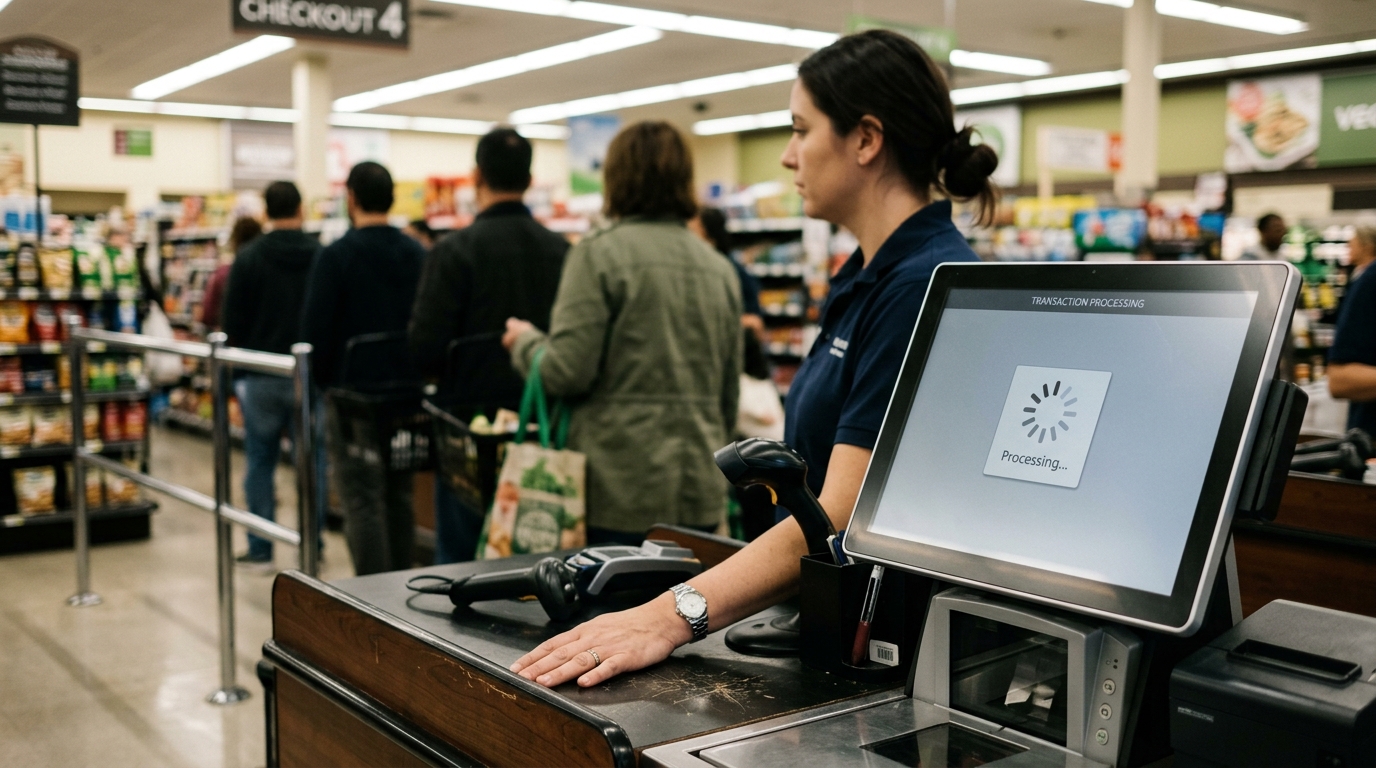
The line is three people deep. The customer at the front is waiting for the terminal to respond. It finally declined. The cashier re-runs it. It approves. Thirty seconds, maybe forty. The people behind them have been standing there the whole time.
One of them puts their basket down and walks out.
That's not a dramatic scenario. That's a Tuesday in a store running on a payment system that was set up years ago and never re-evaluated. The exit wasn't announced. It was just a decision made quietly in line while waiting for a transaction that should have been two taps and done.
Retail payment processing is not a back-office function. It's the last moment of every sale. When it works, customers don't notice. When it doesn't, they leave and they don't always tell you why.
That's where Dataonems comes in. Modern terminals, fast authorization, integrated payments that move customers through the line in seconds instead of minutes so the sale at the front of the queue doesn't quietly cost you the three behind it.
What Retail Payment Processing Actually Covers
Speed Is Not Just Convenience, It's Revenue
Transaction authorization speed affects checkout line length. The checkout line length affects customer patience. Customer patience affects whether the person in line stays or leaves.
Modern retail payment solutions route authorizations in real-time transactions completed in two to three seconds, not eight to ten. The difference sounds trivial. At peak hours, with four registers running, it compounds into meaningful throughput.
Faster checkout also reduces the window for customer doubt. A customer who taps and walks has already committed. A customer waiting for a slow terminal has time to reconsider, check their phone, or notice the exit.
For brick-and-mortar retailers, checkout speed is not a technology preference. It's a conversion metric.
What's Happening to Your Fees That Nobody Explains
Retail checkout payments look simple from the outside. The customer pays. The money arrives. But the path from one to the other passes through a fee structure most retailers have never had fully explained to them.
Interchange fees are set by the card networks Visa, Mastercard, Discover, and Amex. They vary by card type. Rewards cards cost more to process than basic debit cards. Business cards cost more than personal cards. The type of card your customer hands you determines a significant portion of your processing cost, and you have no control over it.
What you do control is who sits between you and those interchange costs, and what they charge for the privilege. Processors who use tiered pricing qualify, mid-qualifying, and non-qualifying bundle interchange into categories that make their margin invisible. You pay one rate for "qualifying" transactions and a higher rate for everything else, with no clear explanation of what determines the category.
Interchange-plus pricing states it directly: interchange at cost, plus a defined processor margin. You can verify it. You can compare it. That transparency alone often reveals a gap between what a retailer is paying and what honest retail merchant services cost.
Secure Retail Payments Are the Foundation, Not an Add-On
Security failures in retail payment processing cost merchants in two ways: direct financial loss from fraud, and the less visible cost of chargeback fees assessed when a disputed transaction is reversed.
Modern secure retail payment systems operate with end-to-end encryption, tokenization of card data, and real-time fraud monitoring. These aren't premium features. They're the baseline your payment infrastructure should be running.
Tokenization means the actual card number is never stored or transmitted in readable form after the initial capture. A data breach that exposes tokenized data exposes nothing usable. For retailers operating in environments with high transaction volume, that protection is the difference between a minor incident and a significant liability.
PCI DSS compliance is required for any business accepting card payments. The compliance process is manageable with the right processor guiding it. It becomes expensive and complicated when processors use it as a recurring fee line item on your statement rather than as a service they support.
What Modern Business Retail Processing Infrastructure Looks Like
The right retail payment solution doesn't just process transactions; it gives you visibility into them.
Real-time reporting lets you see transaction volume, average ticket size, and peak hours as they happen, not in a monthly statement you pull three weeks later. That data improves staffing decisions, inventory management, and pricing strategy.
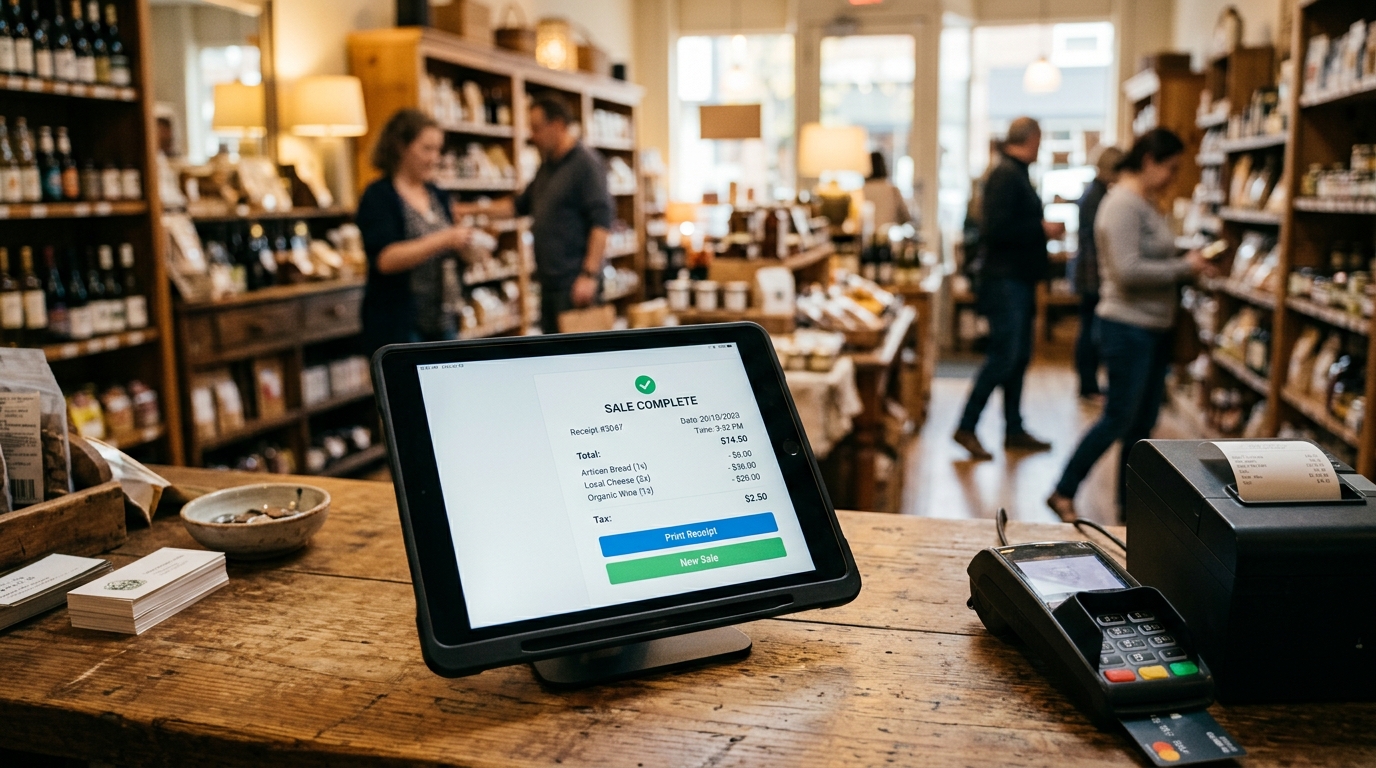
Integrated POS systems connect payment data with your inventory and sales records. A customer returns a purchase, the inventory adjustment and the payment reversal happen in the same system. No reconciliation errors. No manual corrections.
Multi-channel integration matters for retailers operating in-store and online. The payment infrastructure should be the same rates, same settlement, same reporting, regardless of whether the transaction happens at a register or on a website.
Chargeback management tools track disputes, document transaction records, and support the evidence submission process. Chargebacks cost retailers both the transaction amount and a dispute fee. A system that helps you win representments earns its cost.
The Questions to Ask Your Current Processor
Before signing a new contract or renewing an existing one, get clear answers to these:
What is my effective rate? Total fees divided by total volume, what is that number? If your processor can't state it immediately, that's an answer.
What pricing model am I on? Interchange-plus states your actual interchange cost plus a stated margin. Tiered pricing hides the margin. Flat-rate pricing simplifies the math but often costs more. Know which you have.
What does my terminal cost me? Hardware fees, software fees, and monthly minimums how do they affect your all-in cost?
What is the chargeback fee? Some processors charge $25 per dispute, some charge $35 or more. That fee applies whether you win or lose.
What are your early termination terms? Contracts with multi-year commitments and cancellation penalties lock you into a pricing structure regardless of what rates do. Read the exit terms before signing the entry.
The System Should Be Working For You
You built the business. You trained the staff. You stocked the shelves and earned the foot traffic.
The payment system's job is not to get in the way of any of that. Not to slow down the line. Not to extract margin through fees buried in a statement designed to resist scrutiny. Not to lock you into a three-year contract while rates quietly shift.
If your current processor can't show you exactly what you're paying every fee, every rate, every line item stated in plain terms, the confusion is not a communication problem. It's a business model.
You should know what it's costing you. We'll show you.
Lorem ipsum dolor sit amet, consectetur adipiscing elit. Suspendisse varius enim in eros elementum tristique. Duis cursus, mi quis viverra ornare, eros dolor interdum nulla, ut commodo diam libero vitae erat. Aenean faucibus nibh et justo cursus id rutrum lorem imperdiet. Nunc ut sem vitae risus tristique posuere.
Card Style Two
It has survived not only five centuries, but also the leap into electronic typesetting, remaining essentially unchanged.
What is retail payment processing, and how does it work?
Retail payment processing is the infrastructure that authorizes, routes, and settles customer payment transactions. When a customer taps a card or phone at your terminal, the transaction travels through a payment gateway to the card network, which routes it to the customer's bank for authorization. The bank approves or declines. The approval travels back through the same chain in seconds. Funds are settled into your merchant account typically within one to two business days. The fees for that process are charged by the processor, the card networks, and the acquiring bank.
What is the difference between interchange-plus pricing and tiered pricing for retail merchants?
Interchange-plus pricing passes the actual interchange cost set by Visa and Mastercard based on card type directly to the merchant, plus a stated processor margin. You can verify both numbers independently. Tiered pricing bundles transactions into qualified, mid-qualified, and non-qualified categories at different rates. The processor determines which category each transaction falls into, and its margin is embedded in the tier structure rather than stated separately. For most retailers processing significant volume, interchange-plus is more transparent and often less expensive.
How do I calculate my effective processing rate?
Add up all processing fees for a month, transaction fees, monthly fees, PCI fees, statement fees, everything on the statement. Divide that total by your gross processing volume for the same month. That's your effective rate. Compare it to what your processor quoted you when you signed. If they don't match, the difference needs an explanation. DATA ONE will run this calculation on your actual statements as part of a free audit.
What is tokenization, and why does it matter for secure retail payments?
Tokenization replaces actual card data with a randomly generated token after the initial capture. The token is used for transaction routing, but it contains no usable card information. If your system is ever breached, the exposed data cannot be used to commit fraud. It's the standard approach to card data security and should be a baseline feature of any retail payment processing system, not an add-on.
How do chargebacks affect retail merchants, and what can be done about them?
A chargeback occurs when a customer disputes a transaction, and the card network reverses it. The merchant loses the transaction amount and is assessed a chargeback fee, typically $25 to $35, regardless of the outcome. Excessive chargebacks can result in higher processing rates or account termination. The best defense is clean transaction records: clear business name descriptors on statements, documented refund policies, and evidence of delivery or service. A processor with active chargeback management tools supports the representation process, submitting evidence to dispute illegitimate chargebacks and recover revenue.
Brooklyn Simmons
Blocks/Grid
Fusce at sapien turpis. Aliquam at purus posuere, mattis sapien nec, dignissim ipsum. Cras ac auctor eros, sagittis euismod ante. Nunc non luctus orci. Vivamus ultrices cursus nisi sed vehicula.
Proin dapibus, sapien a suscipit sodales, justo velit placerat quam, sit amet efficitur nunc est congue quam. Phasellus varius congue tellus, non dictum ligula consectetur eu. Nam lobortis varius eros. Nulla diam augue, suscipit id pellentesque in, tristique id sapien. Vestibulum congue lorem ac turpis pulvinar ultricies.
Mauris tristique, urna hendrerit ornare viverra, diam nibh vestibulum nulla, sit amet porttitor massa magna at elit. Curabitur nec diam ac nulla interdum ultrices vel non nisi. Nunc ut vehicula mauris. Ut facilisis cursus hendrerit. Suspendisse facilisis auctor nibh sit amet tempus. Sed scelerisque sit amet lectus tristique varius.
Lorem ipsum dolor sit amet, consectetur adipiscing elit. Suspendisse varius enim in eros elementum tristique. Duis cursus, mi quis viverra ornare, eros dolor interdum nulla, ut commodo diam libero vitae erat. Aenean faucibus nibh et justo cursus id rutrum lorem imperdiet. Nunc ut sem vitae risus tristique posuere.
Slow checkout costs sales, and hidden processing fees quietly cut into margins. Retail payment processing should solve both. Here's what a better system looks like.
Courtney Henry
May 6, 2026
There are many variations of passages of Lorem Ipsum available, but the majority have suffered alteration in some form,
Oops! Something went wrong while submitting the form.
Guest
6 hours ago
Lorem ipsum dolor sit amet, consectetur adipiscing elit. Suspendisse varius enim in eros elementum tristique. Duis cursus, mi quis viverra ornare, eros dolor interdum nulla, ut commodo diam libero vitae erat. Aenean faucibus nibh et justo cursus id rutrum lorem imperdiet. Nunc ut sem vitae risus tristique posuere.
Oops! Something went wrong while submitting the form.
Guest
•
6 hours ago
Lorem ipsum dolor sit amet, consectetur adipiscing elit. Suspendisse varius enim in eros elementum tristique. Duis cursus, mi quis viverra ornare, eros dolor interdum nulla, ut commodo diam libero vitae erat. Aenean faucibus nibh et justo cursus id rutrum lorem imperdiet. Nunc ut sem vitae risus tristique posuere.
Ready to Build the Right Payment System for Your Business?
Speak with a Data One payments specialist to design a solution aligned with how your business operates — from payments and POS to software and growth tools.





.svg)