Invoicing and Billing Made Simple: How Businesses Get Paid Faster
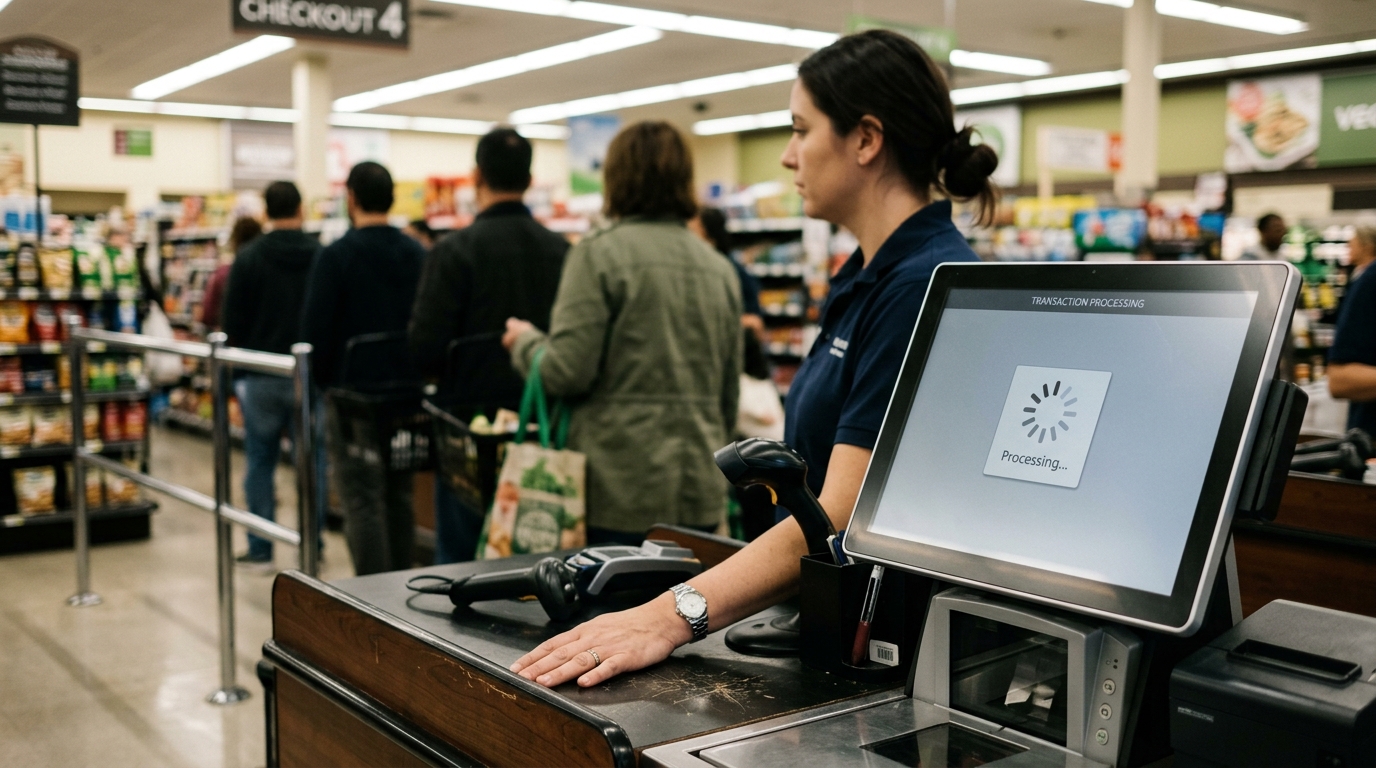
The job is done. The service was delivered. The work was good. And yet the money is not in your account because somewhere between completing the work and receiving payment, your invoicing and billing process introduced a delay that nobody is measuring, nobody is managing, and nobody is fixing.
This is not a rare situation. It is the standard operating reality for tens of thousands of small businesses, independent contractors, healthcare practices, and service companies operating right now. The work happens on time. The billing happens late, or incorrectly, or through a process so manual and fragmented that the payment cycle stretches from days into weeks and in some cases, into months of follow-up that nobody has time to do.
Invoicing and billing is not a back-office afterthought. It is the final step of every transaction your business completes, and when that step fails when it is slow, error-prone, or invisible to the customer every other thing you did right becomes harder to monetize. Dataonems works with small businesses and service operations to close that gap between work completed and revenue collected, because the distance between those two things should be measured in hours, not weeks.
The Invoice That Never Gets Sent Is the Payment That Never Arrives
Most invoicing failures do not announce themselves as failures. They announce themselves as delays. The invoice goes out two days after the job closes instead of the same afternoon. The itemization is incomplete because the technician did not log the parts correctly in the field. The client's email on file is outdated because nobody updated the record after the last job. The invoice goes to spam because it was sent from a personal Gmail account with no business identity.
None of these are catastrophic individually. Collectively, they describe a billing system that operates at friction, one that is slowly and quietly reducing your effective revenue on every job, every week, every month.
The cost of a late invoice is not just the time value of money, though that is real. It is the signal it sends. A late or disorganized invoice tells your customer that the transaction is not your priority once the work is done. It introduces doubt about the professionalism of the service they just received. And it creates a window sometimes days wide during which your customer's enthusiasm for paying you is cooling while your invoice is still sitting in a draft folder.
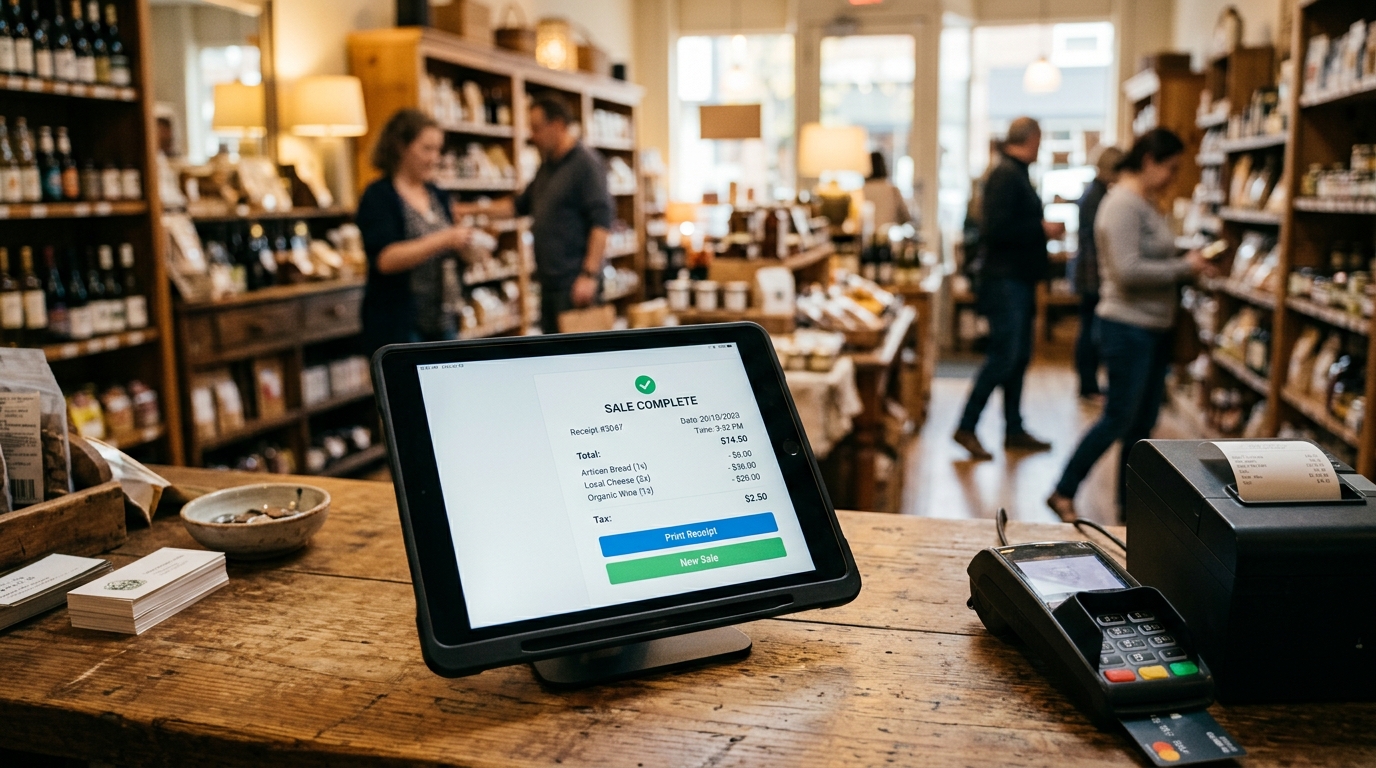
Modern online invoicing solutions eliminate this window entirely. They send the invoice the moment the job closes, automatically, from a professional business identity, with complete line items pre-populated from the job record. The payment link is embedded. The customer receives it before they have left the site. And your cash flow improves not because you chased anyone harder, but because you closed the gap between delivery and billing.
Manual Billing Systems Are Not Neutral They Are Actively Costing You
There is a belief, common among small business owners, that manual billing processes are free. The logic runs: no software subscription, no implementation cost, no learning curve. The work gets done eventually. Clients pay eventually. The system works.
This belief is wrong, and it is expensive to hold.
Manual billing systems carry a cost that does not appear on any invoice you send it appears in the hours your staff spends entering data that already exists in another system, reconciling payments against records that do not match, following up on invoices that were sent to the wrong address, and correcting errors that should have been caught at the point of entry. These are not edge cases. In any business running volume, a restaurant group, a multi-technician field service operation, a medical practice with thirty patients a day, manual billing is a full-time problem disguised as a process.
The arithmetic is straightforward. If one billing error per day costs your team 20 minutes to identify and correct, that is over 80 hours per year spent fixing a problem that automated invoicing eliminates at the source. If your average invoice cycle runs 14 days because of manual follow-up delays, and your monthly revenue is $50,000, you are carrying two weeks of earned revenue as a permanent receivable balance money you have already earned, sitting idle, because the billing system cannot close the loop faster.
Digital billing tools do not just speed up the process. They eliminate the entire category of errors that manual processes generate. Pre-built templates, automated payment reminders, real-time status tracking, and direct integration with your point-of-sale or field service software mean that the invoice is accurate the first time, every time — and the customer knows exactly what they owe and how to pay it before they have a chance to forget.
Your Customers Want to Pay You Your Billing Process Is Getting in the Way
Payment friction is not caused by unwilling customers. It is caused by billing systems that make payment harder than it needs to be. When a customer receives an invoice with no embedded payment link, they have to open a browser, navigate to a payment portal, enter their card information manually, and return to confirm. When they receive a PDF attachment with wire transfer instructions, they have to open their bank, initiate a transfer, and wait for confirmation. When they receive a paper invoice in the mail, they have to find a stamp.
Every additional step between your invoice and your customer's payment is a point at which they stop. Not permanently, most of them intend to pay you but long enough for the task to fall off the priority list, long enough to end up in a follow-up email from your billing department, long enough to cost you days or weeks of float.
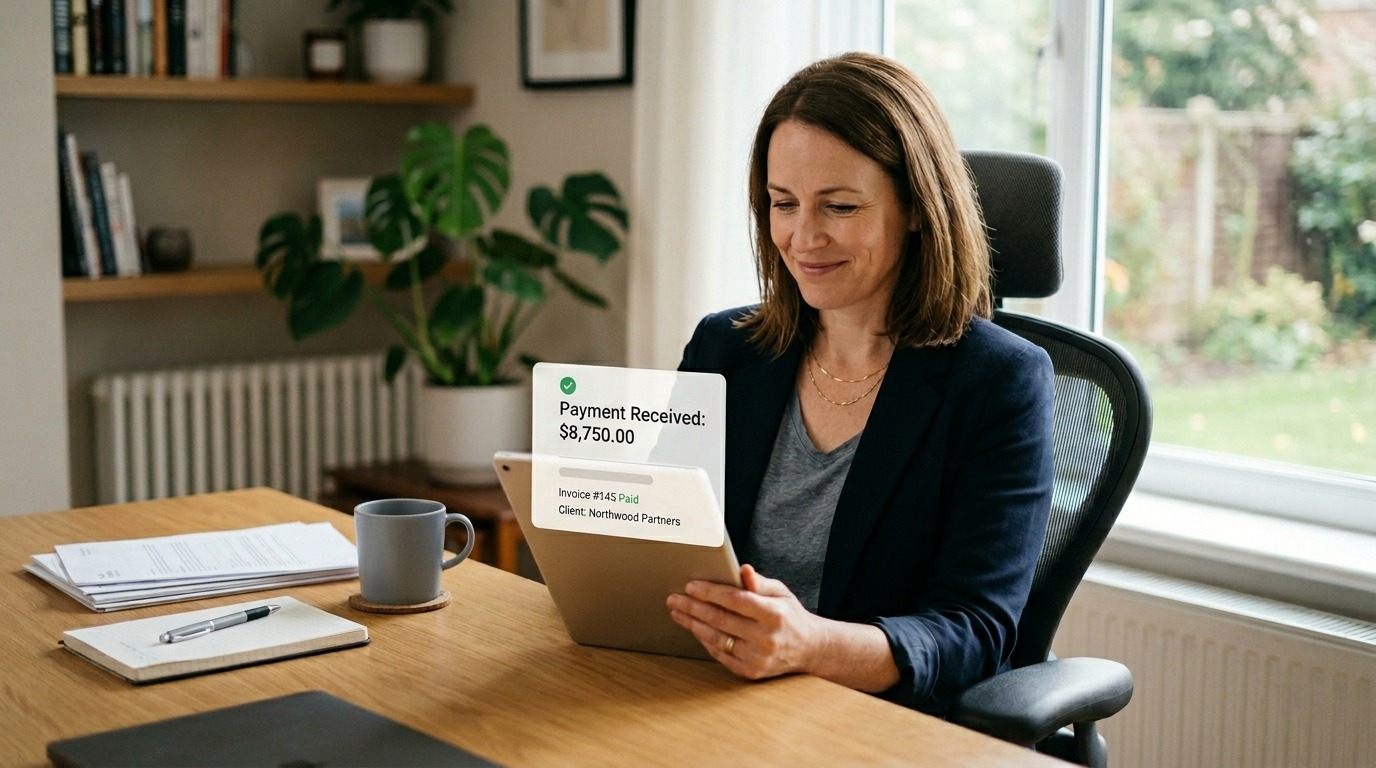
Secure billing paymentsembedded directly in the invoice close that gap. One link. One tap. The transaction is complete, the payment is recorded, and your accounting system updates in real time. No follow-up. No reconciliation. No float.
This is not a feature available only to enterprise businesses running expensive software stacks. Modern business billing systems purpose-built for small and mid-size operations deliver this capability at a price point that pays for itself on the first invoice cycle. The barrier to adoption is not cost. It is the decision to stop tolerating the alternative.
Automated Invoicing Is Not a Luxury It Is What Your Competition Already Has
The gap between businesses running automated invoicing and those still managing billing manually is widening and it is widening in the direction that affects every metric your business cares about. Days Sales Outstanding (DSO), the average number of days it takes to collect payment after a sale, is a direct measure of how well your billing system functions. Businesses running automated invoicing consistently reduce DSO. Businesses running manual processes consistently do not.
This is not a theory. It is the documented outcome of every industry sector that has made the transition at scale. Healthcare practices that moved to automated invoicing and digital patient billing reduced their collection cycles. Field service companies that integrated automated invoicing directly with their dispatch software eliminated the billing lag between job completion and payment request. Retailers that adopted real-time digital receipts and embedded payment links saw faster settlement on every transaction.
The businesses that have not made this transition are not holding a neutral position. They are falling behind a standard that their competitors and more importantly, their customers have already accepted as baseline. A customer who receives a clean, accurate, instantly payable digital invoice from one vendor and a delayed, manually prepared invoice from another draws a conclusion about both businesses. That conclusion is not in favor of the one running the slower process.
Automated invoicing is not a technology upgrade. It is a business decision about whether your billing system reflects the same professionalism as the work you actually deliver.
What a Modern Business Billing System Actually Requires
Not every billing platform delivers what a working business actually needs. The market is full of tools that look capable in a demo and reveal their limitations in production when your team is in the field, your front desk is managing a waiting room, or your kitchen is running at capacity and the POS needs to produce an invoice in under 30 seconds.
A business billing system that works under real operating conditions delivers: invoices that generate automatically from job or transaction records without requiring manual data entry; payment links that are embedded, not attached; support for every payment method your customers use, including tap-to-pay, digital wallets, and ACH; real-time payment status visible to both your team and your customer; automatic payment reminders that go out on a schedule without requiring staff time; and direct integration with your accounting software so that reconciliation is not a separate job.
The integration point is where most small business billing systems fail in practice. A tool that generates invoices but does not connect to your job management software, your point-of-sale system, or your accounting platform creates a new manual step data re-entry at exactly the point where automation should be eliminating manual steps. Before selecting any invoicing platform, test the integration against your actual workflow, not a generic demo scenario.
DATA ONE builds payment and invoicing infrastructure designed around the specific operational contexts of the businesses we support with the integrations, the payment capabilities, and the reliability that real-volume, real-world operations require.
The Verdict
The verdict on invoicing and billing is not complicated. Every day your business sends invoices late, sends them with errors, or sends them through a process that makes payment harder than it needs to be, you are accepting a voluntary reduction in the cash flow you have already earned. The work is done. The revenue is real. The only thing standing between you and faster payment is the system you are using to ask for it.
Modern digital billing tools, automated invoicing, and online invoicing solutions with embedded secure billing payments exist precisely because the cost of the alternative has already been measured and the number is too large to ignore. The transition is not disruptive. The decision not to make it is.
Your billing process should be the easiest part of getting paid. If it is not, that is a solvable problem and the solution is already available.Book your free operations audit →
Tables
These unsightly stains
Noticing brown spots on your ceiling
How Infectious Diseases Affect the Brain
Laudantium totam
Was sollte alles in einem stehen?
Accusantium doloremque
Using sound to model the world
Nemo enim ipsam
Common Skin Care Myths
Eritatis et quasi
Cards
Card Style One
Lorem ipsum dolor sit amet, consectetur adipiscing elit. Suspendisse varius enim in eros elementum tristique. Duis cursus, mi quis viverra ornare, eros dolor interdum nulla, ut commodo diam libero vitae erat. Aenean faucibus nibh et justo cursus id rutrum lorem imperdiet. Nunc ut sem vitae risus tristique posuere.
Card Style Two
It has survived not only five centuries, but also the leap into electronic typesetting, remaining essentially unchanged.
What is the difference between invoicing and billing?
Invoicing is the process of issuing a document that requests payment for goods or services delivered. Billing is the broader system that encompasses the entire payment cycle from invoice creation through payment collection, reconciliation, and record-keeping. In practice, the terms are often used interchangeably, but a complete business billing system handles both.
How does automated invoicing reduce the time it takes to get paid?
Automated invoicing eliminates the delay between job completion and invoice delivery. When an invoice is generated and sent automatically at the close of a transaction with a payment link embedded the customer receives it immediately and can pay without additional steps. This removes the manual preparation lag, reduces follow-up requirements, and shortens the average collection cycle measurably.
Are online invoicing solutions secure enough for healthcare or financial services?
Yes, provided the platform is built to the appropriate compliance standards. For healthcare practices, look for platforms that support HIPAA-compliant billing workflows. For any business handling card payments, the platform must be PCI DSS compliant. These are not optional specifications, they are legal requirements, and any serious invoicing platform will document its compliance posture clearly.
What should a small business look for in a digital billing tool?
The non-negotiable features are: automated invoice generation, embedded payment links, support for multiple payment methods, real-time payment tracking, automatic reminders, and integration with your existing accounting or operations software. Any tool that requires manual data re-entry at any point in the process is introducing the problem it is supposed to solve.
How quickly can automated invoicing improve cash flow?
The impact is immediate on the first invoice cycle. Businesses typically see a reduction in Days Sales Outstanding within the first billing period after switching to an automated system because the invoice goes out faster, the payment link removes friction, and automated reminders replace manual follow-up.
Brooklyn Simmons
Blocks/Grid
Fusce at sapien turpis. Aliquam at purus posuere, mattis sapien nec, dignissim ipsum. Cras ac auctor eros, sagittis euismod ante. Nunc non luctus orci. Vivamus ultrices cursus nisi sed vehicula.
Proin dapibus, sapien a suscipit sodales, justo velit placerat quam, sit amet efficitur nunc est congue quam. Phasellus varius congue tellus, non dictum ligula consectetur eu. Nam lobortis varius eros. Nulla diam augue, suscipit id pellentesque in, tristique id sapien. Vestibulum congue lorem ac turpis pulvinar ultricies.
Mauris tristique, urna hendrerit ornare viverra, diam nibh vestibulum nulla, sit amet porttitor massa magna at elit. Curabitur nec diam ac nulla interdum ultrices vel non nisi. Nunc ut vehicula mauris. Ut facilisis cursus hendrerit. Suspendisse facilisis auctor nibh sit amet tempus. Sed scelerisque sit amet lectus tristique varius.
Lorem ipsum dolor sit amet, consectetur adipiscing elit. Suspendisse varius enim in eros elementum tristique. Duis cursus, mi quis viverra ornare, eros dolor interdum nulla, ut commodo diam libero vitae erat. Aenean faucibus nibh et justo cursus id rutrum lorem imperdiet. Nunc ut sem vitae risus tristique posuere.
Slow billing drains your cash flow on every invoice. Here's exactly what modern businesses need to collect faster, reduce late payments, and get paid on time.
Courtney Henry
May 6, 2026
There are many variations of passages of Lorem Ipsum available, but the majority have suffered alteration in some form,
Oops! Something went wrong while submitting the form.
Guest
6 hours ago
Lorem ipsum dolor sit amet, consectetur adipiscing elit. Suspendisse varius enim in eros elementum tristique. Duis cursus, mi quis viverra ornare, eros dolor interdum nulla, ut commodo diam libero vitae erat. Aenean faucibus nibh et justo cursus id rutrum lorem imperdiet. Nunc ut sem vitae risus tristique posuere.
Oops! Something went wrong while submitting the form.
Guest
•
6 hours ago
Lorem ipsum dolor sit amet, consectetur adipiscing elit. Suspendisse varius enim in eros elementum tristique. Duis cursus, mi quis viverra ornare, eros dolor interdum nulla, ut commodo diam libero vitae erat. Aenean faucibus nibh et justo cursus id rutrum lorem imperdiet. Nunc ut sem vitae risus tristique posuere.
Ready to Build the Right Payment System for Your Business?
Speak with a Data One payments specialist to design a solution aligned with how your business operates — from payments and POS to software and growth tools.




.svg)