Why Generic POS Systems Fail in Clinical Settings
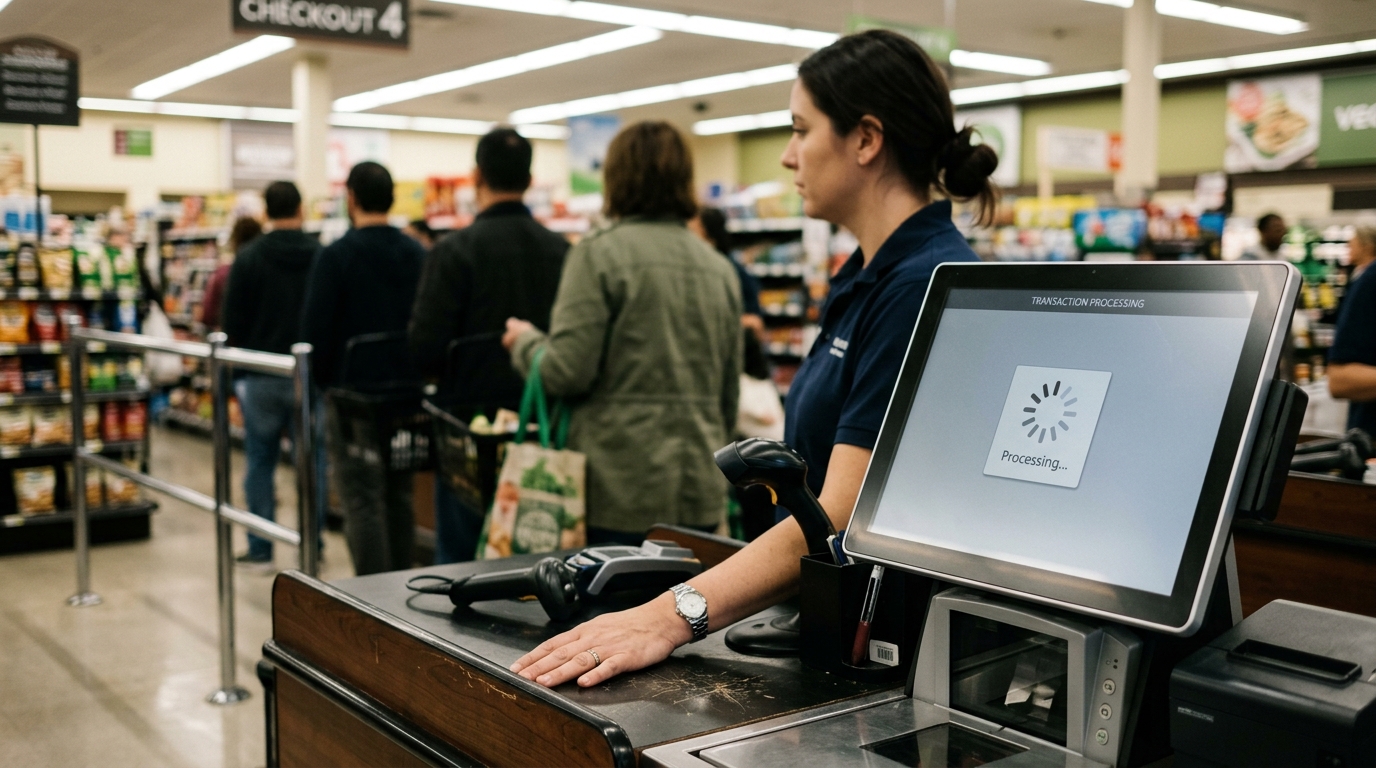
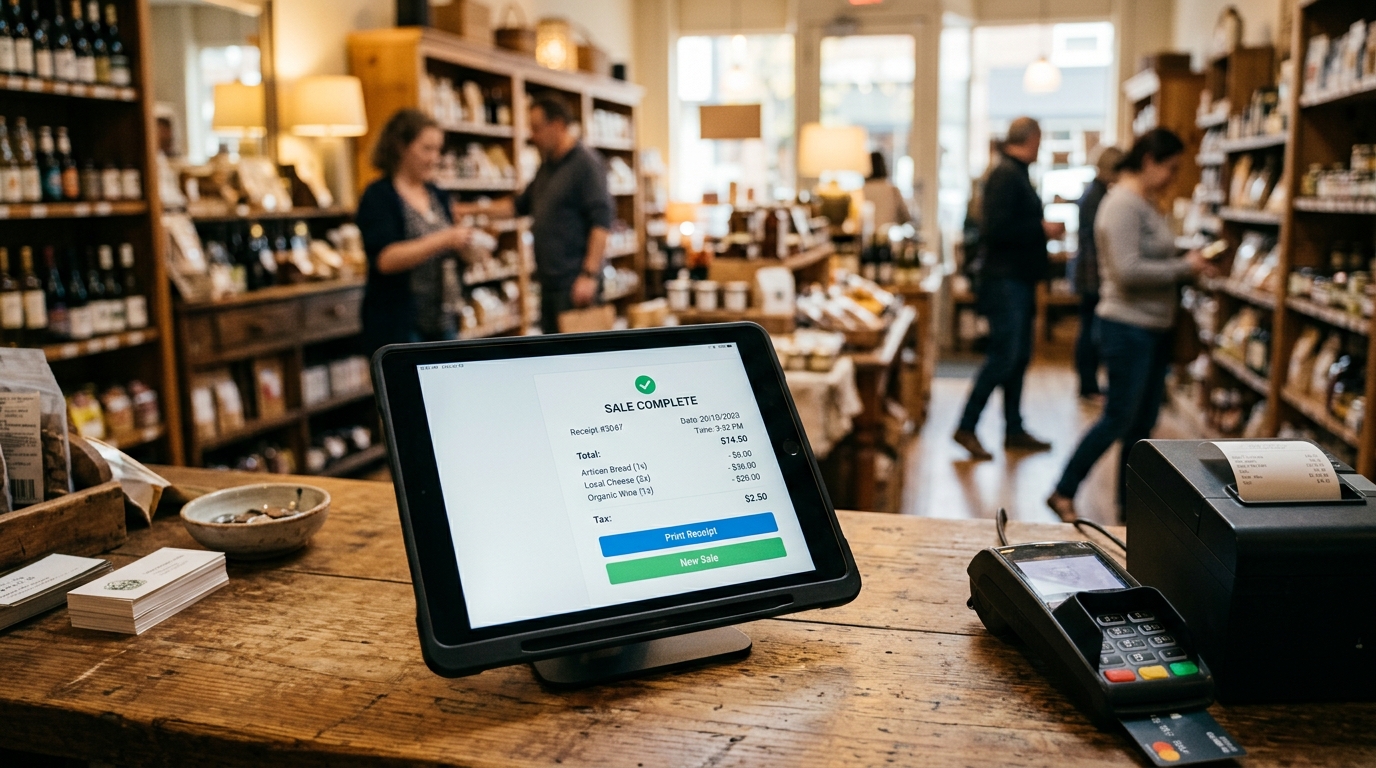
The market is full of POS systems built for retail and adapted, loosely, for everything else. Restaurants, boutiques, and coffee shops have shaped the default feature set of most commercial payment terminals. Those systems process transactions efficiently in environments where the product is fixed-price, the customer is anonymous, and compliance requirements stop at PCI DSS.
Clinical environments are structurally different in every one of those dimensions.
Patient Billing Is Not Retail Billing
In a medical or dental office, a single patient visit generates multiple payment obligations that rarely resolve in a single transaction. The copy is collected at checkout. The insurance claim is submitted and adjudicated over the following weeks. The patient balance the amount insurance didn't cover arrives as a statement days or weeks after the visit. Some patients are on payment plans. Some have health savings account cards. Some pay a portion at checkout and the remainder after the explanation of benefits arrives.
A retail POS system processes one transaction per customer and closes the interaction. A clinic POS system has to connect to the patient's account, reflect the current balance, accept partial payments against an outstanding balance, and update the patient record accurately all at the front desk, in real time, while the next patient is waiting.
A system that cannot do this forces staff to work around it: hand-calculating patient balances, processing payments in one system and recording them in another, and manually reconciling the two at the end of the day. Every workaround is an error waiting to happen.
The Front Desk Is Not a Retail Counter
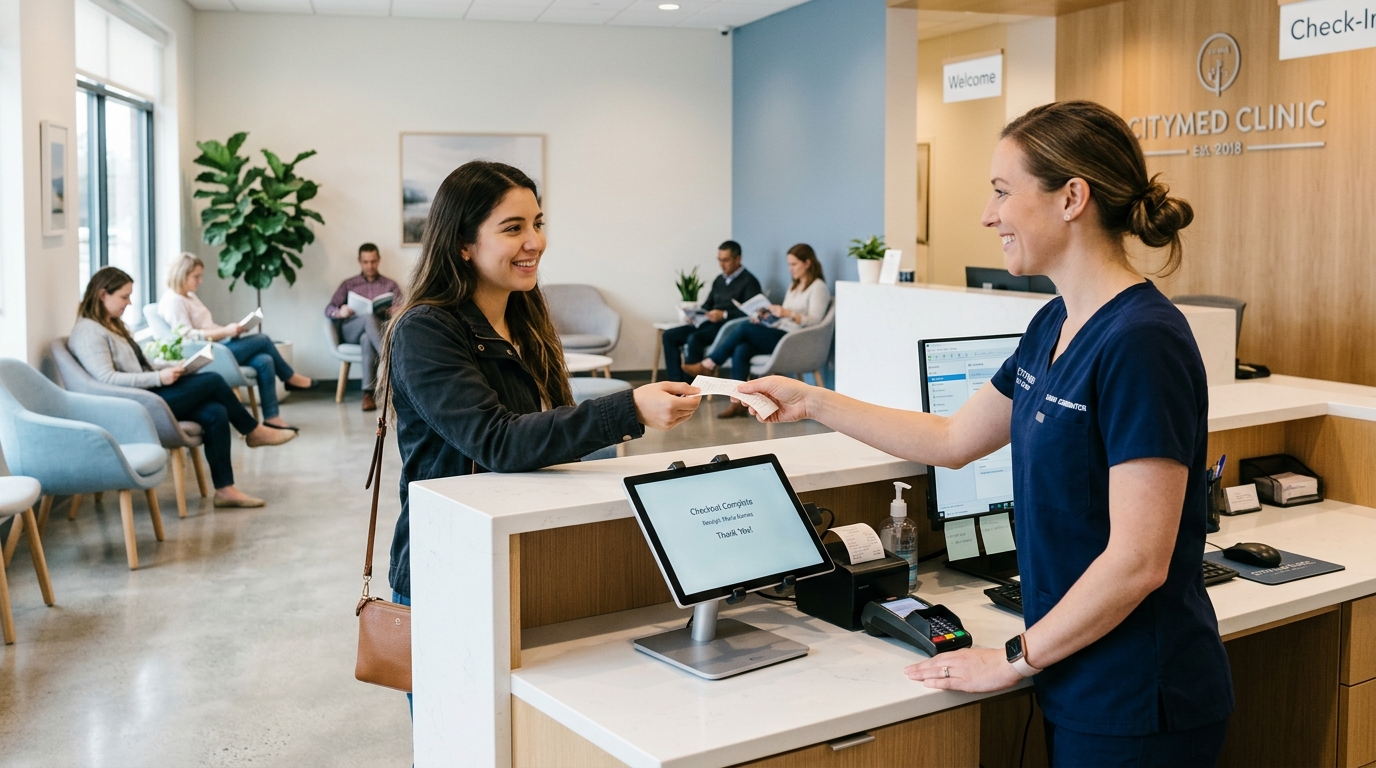
Retail checkout is a transaction with a stranger. Clinical checkout is an interaction with a patient who has just disclosed personal health information, received potentially distressing news, and placed trust in a provider. The standard of privacy and care that governs the clinical interaction does not end when the patient walks to the front desk.
A healthcare front desk payment system that displays patient balances on a screen visible to others in the waiting room violates the spirit of HIPAA, regardless of whether it triggers a formal violation. A terminal that requires staff to verbally confirm account details creates the same problem. A system that stores payment information insecurely compounds it.
Generic POS systems are not designed with these vulnerabilities in mind. Purpose-built clinic checkout terminals are.
What a Clinic POS System Actually Needs to Do
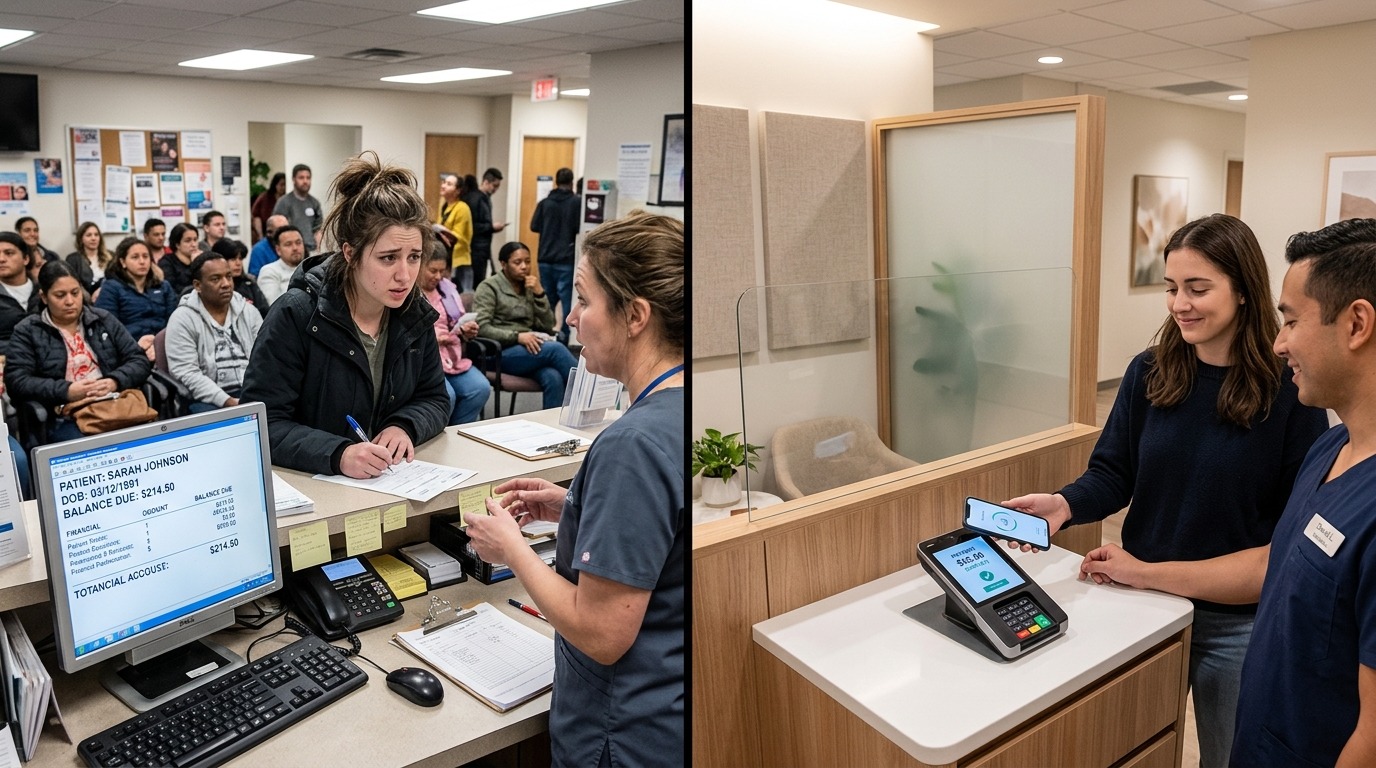
The requirements of a clinical payment environment are specific, non-negotiable, and routinely underestimated by practices that default to whatever POS system their billing vendor recommends or their bank offers.
Integration With the Practice Management System
The most fundamental requirement of a clinic POS system is that it talks to the practice management platform. Patient account balances, appointment records, insurance payment status, and outstanding statements all live in the practice management system. A payment terminal that operates independently of that system forces double entry; the payment is processed in the terminal and then manually posted to the patient account.
Double entry is not a minor inconvenience. It is a reliable source of posting errors, misapplied payments, and reconciliation failures that cost staff hours every week and patients confusion every billing cycle. When a patient calls to ask why they received a balance statement after paying at checkout, the answer is almost always a double-entry failure somewhere in a disconnected payment workflow.
A fully integrated clinic POS system pulls the patient balance from the practice management system at checkout, processes the payment, and posts it back to the patient account automatically. The transaction is complete in one interaction, in one system.
Support for Every Payment Type a Healthcare Patient Uses
Healthcare patients do not pay in a single way. Copays are frequently paid by debit or credit card. High-deductible plan patients often pay with health savings accounts or flexible spending account cards, which have specific processing requirements that generic terminals handle inconsistently. Some patients prefer contactless clinic payments tap-to-pay on a phone or card particularly in post-pandemic clinical environments where minimizing contact remains a preference.
A doctor office payment terminal that cannot process HSA and FSA cards reliably forces front desk staff into awkward conversations with patients whose only available payment method the terminal rejects. A terminal without contactless capability signals an outdatedness that undermines the practice's clinical credibility.
The payment types a clinic supports are not a feature list; they are a statement about how well the practice understands its patients.
End-of-Day Reconciliation That Closes Without Manual Assembly
The daily close at a medical or dental office involves reconciling copay collections, patient balance payments, payment plan installments, and any ancillary product sales against the day's appointment schedule and the practice management system's transaction log. In a practice with 40 to 60 patient visits per day, this reconciliation is not trivial.
A clinic POS system that produces an accurate, automatically generated end-of-day report broken down by payment type, by provider, by appointment, and by payment plan eliminates the manual assembly that turns a 15-minute close into a 90-minute one. More importantly, it eliminates the errors that a manual close introduces into the billing records that feed insurance claim workflows and patient statements.
The Compliance Dimension Generic Systems Ignore
Healthcare payment environments carry compliance obligations that extend well beyond the PCI DSS requirements that govern all card payment processing. HIPAA's Privacy Rule and Security Rule create specific requirements around how patient financial information is handled, stored, and transmitted requirements that most generic POS systems were never designed to address.
Patient Financial Data Is Protected Health Information
Under HIPAA, a patient's account balance, payment history, and insurance status are protected health information. This means the payment system that holds or transmits this data is subject to HIPAA's security requirements: encryption in transit and at rest, access controls, audit logging, and breach notification obligations.
A generic retail POS system that stores transaction data in a cloud environment not configured for HIPAA compliance creates liability for the practice regardless of whether the practice's billing software is compliant. The payment terminal is part of the compliance perimeter, and it is frequently the weakest point in it.
A secure clinic POS is built with HIPAA-aware data handling at the architecture level. Encryption, access controls, and audit trails are not add-on configurations; they are baseline features of a system designed for healthcare.
The Cost of a Compliance Failure at the Front Desk
HIPAA enforcement actions related to payment and billing systems are not hypothetical. Practices have faced significant penalties for inadequate safeguards on patient financial data penalties that far exceed the cost of deploying a compliant system in the first place.
The front desk is the most exposed point in the practice's compliance environment. It handles the highest volume of patient interactions, the broadest range of payment scenarios, and the most direct handling of protected health information outside the clinical record. A POS system that treats that exposure as a retail problem gives the right answer to the wrong question.
Specialty Clinics Have Requirements the General Market Ignores
Medical and dental practices represent the largest segment of clinical payment volume, but specialty clinics dermatology, ophthalmology, physical therapy, chiropractic, mental health, and aesthetic medicine carry payment workflow requirements that general-purpose systems handle poorly.
Mixed Billing Environments in Specialty Practice
A dermatology practice, for example, bills insurance for medical visits and collects cash payments for cosmetic procedures sometimes in the same appointment. The POS system has to handle both payment types accurately, apply them to the correct account categories, and reflect the split correctly in both the practice management system and the accounting export.
A mental health practice collects copays for insurance-covered sessions and full fees for self-pay clients on a sliding scale, with payment plan arrangements for ongoing treatment relationships. An aesthetic medicine clinic processes package sales, gift card redemptions, membership billing, and insurance copays all at the same front desk.
A generic clinic checkout terminal handles one of these workflows and creates workarounds for the rest. A purpose-built medical office POS handles the full range as standard functionality, because the range is not unusual, it is the reality of how specialty practices bill.
Package and Membership Billing That Doesn't Require a Second System
Specialty practices that offer treatment packages, membership programs, or prepaid service bundles need a POS system that tracks redemptions, manages balance drawdowns, and handles recurring billing without requiring a separate software platform for each billing type.
When the POS system, the membership management system, and the appointment platform are disconnected, front desk staff spend the first and last five minutes of every patient interaction switching between systems, reconciling balances manually, and hoping the numbers agree. They rarely do on the first check.
The Verdict

The clinic POS system at your front desk is doing one of two things: reinforcing the trust your clinical team builds in the exam room, or quietly dismantling it.
A checkout experience that is slow, insecure, or disconnected from the patient's account tells the patient something about the practice, something that no amount of clinical excellence fully corrects. The payment terminal is visible, tangible, and immediate. It is the patient's last impression of the visit and their first impression of the billing relationship that follows.
Generic retail systems were not built for this environment. They were not built for HIPAA, for HSA cards, for partial-payment posting against outstanding balances, or for the end-of-day reconciliation complexity that clinical billing creates. Deploying them in a clinical setting is not a budget decision; it is a compliance risk, an operational inefficiency, and a patient experience failure packaged as a cost savings.
The practices that understand what their front desk payment environment actually requires and deploy a purpose-built clinic POS system to meet it close more cleanly, retain more patients, and operate with less exposure than those that don't.
Ready to audit your clinic's checkout experience? Book your free operations audit →
Tables
Cards
Card Style One
Lorem ipsum dolor sit amet, consectetur adipiscing elit. Suspendisse varius enim in eros elementum tristique. Duis cursus, mi quis viverra ornare, eros dolor interdum nulla, ut commodo diam libero vitae erat. Aenean faucibus nibh et justo cursus id rutrum lorem imperdiet. Nunc ut sem vitae risus tristique posuere.
.svg)

Frequently Asked Questions
What is a clinic POS system and how is it different from a standard POS?
A clinic POS system is a payment processing platform designed specifically for healthcare environments. Unlike standard retail POS systems, it integrates with practice management software to pull patient balances and post payments automatically, supports HSA and FSA card processing, handles partial payments against outstanding balances, and is built with HIPAA-compliant data handling for patient financial information.
Why can't medical offices use a standard retail POS system?
Retail POS systems process fixed-price transactions with anonymous customers and store no protected health information. Medical offices manage patient account balances that change as insurance adjudication occurs, process payments against outstanding balances that may span multiple visits, handle HSA and FSA cards with specific processing requirements, and are subject to HIPAA obligations that govern how patient financial data is stored and transmitted. A retail system meets none of these requirements reliably.
What compliance requirements apply to clinic checkout terminals?
Clinic checkout terminals must meet PCI DSS requirements for card payment security and HIPAA requirements for the handling of patient financial data, which qualifies as protected health information. This means encryption in transit and at rest, access controls, audit logging, and data handling practices configured for a HIPAA-covered entity's environment.
How do clinic POS systems handle HSA and FSA payments?
Purpose-built healthcare front desk payment systems are configured to process health savings accounts and flexible spending account cards, which require specific merchant category codes and transaction handling that generic retail terminals apply inconsistently. A clinic POS system processes these cards reliably without requiring staff to manage manual workarounds for patients whose primary payment method is an HSA or FSA card.
What should a clinic look for when choosing a POS system?
The critical requirements are: native integration with the practice management system to eliminate double entry, support for all payment types including HSA/FSA and contactless payments, HIPAA-compliant data handling at the infrastructure level, automated end-of-day reconciliation reporting, and the ability to handle mixed billing environments copays, patient balances, payment plans, and package redemptions within a single workflow.
Brooklyn Simmons

Blocks/Grid
Fusce at sapien turpis. Aliquam at purus posuere, mattis sapien nec, dignissim ipsum. Cras ac auctor eros, sagittis euismod ante. Nunc non luctus orci. Vivamus ultrices cursus nisi sed vehicula.
Proin dapibus, sapien a suscipit sodales, justo velit placerat quam, sit amet efficitur nunc est congue quam. Phasellus varius congue tellus, non dictum ligula consectetur eu. Nam lobortis varius eros. Nulla diam augue, suscipit id pellentesque in, tristique id sapien. Vestibulum congue lorem ac turpis pulvinar ultricies.
Mauris tristique, urna hendrerit ornare viverra, diam nibh vestibulum nulla, sit amet porttitor massa magna at elit. Curabitur nec diam ac nulla interdum ultrices vel non nisi. Nunc ut vehicula mauris. Ut facilisis cursus hendrerit. Suspendisse facilisis auctor nibh sit amet tempus. Sed scelerisque sit amet lectus tristique varius.
Lorem ipsum dolor sit amet, consectetur adipiscing elit. Suspendisse varius enim in eros elementum tristique. Duis cursus, mi quis viverra ornare, eros dolor interdum nulla, ut commodo diam libero vitae erat. Aenean faucibus nibh et justo cursus id rutrum lorem imperdiet. Nunc ut sem vitae risus tristique posuere.
The wrong clinic POS system costs you time, trust, and revenue. What medical, dental, and specialty clinics need from a payment system that actually fits healthcare.

Courtney Henry
There are many variations of passages of Lorem Ipsum available, but the majority have suffered alteration in some form,
Reply
Kathryn Murphy
There are many variations of passages of Lorem Ipsum available, but the majority have suffered alteration in some form,
Reply
Eleanor Pena
There are many variations of passages of Lorem Ipsum available, but the majority have suffered alteration in some form,
Reply
Jenny Wilson
There are many variations of passages of Lorem Ipsum available, but the majority have suffered alteration in some form,
ReplyLeave a Comment