Debit Card Processing: What Every Business Owner Should Understand
Your customers tap and go. You see a green checkmark. You assume the money is on the way.
That assumption is costing some businesses real money.
Debit card processing is not one system. It is multiple systems banks, card networks, payment processors all communicating in real time, all charging for their role, and none of them explaining the breakdown to you. The processor set the rules. You agreed to them. And the difference between PIN debit and signature debit alone can shift your effective rate on hundreds of thousands of dollars in annual volume.
Understanding how debit card payment processing works is not a technical exercise. It is a financial one.
That’s exactly why businesses work with Dataonems to break down debit card processing costs, clarify fee structures, and help merchants understand how each transaction type directly impacts their margins and overall profitability.
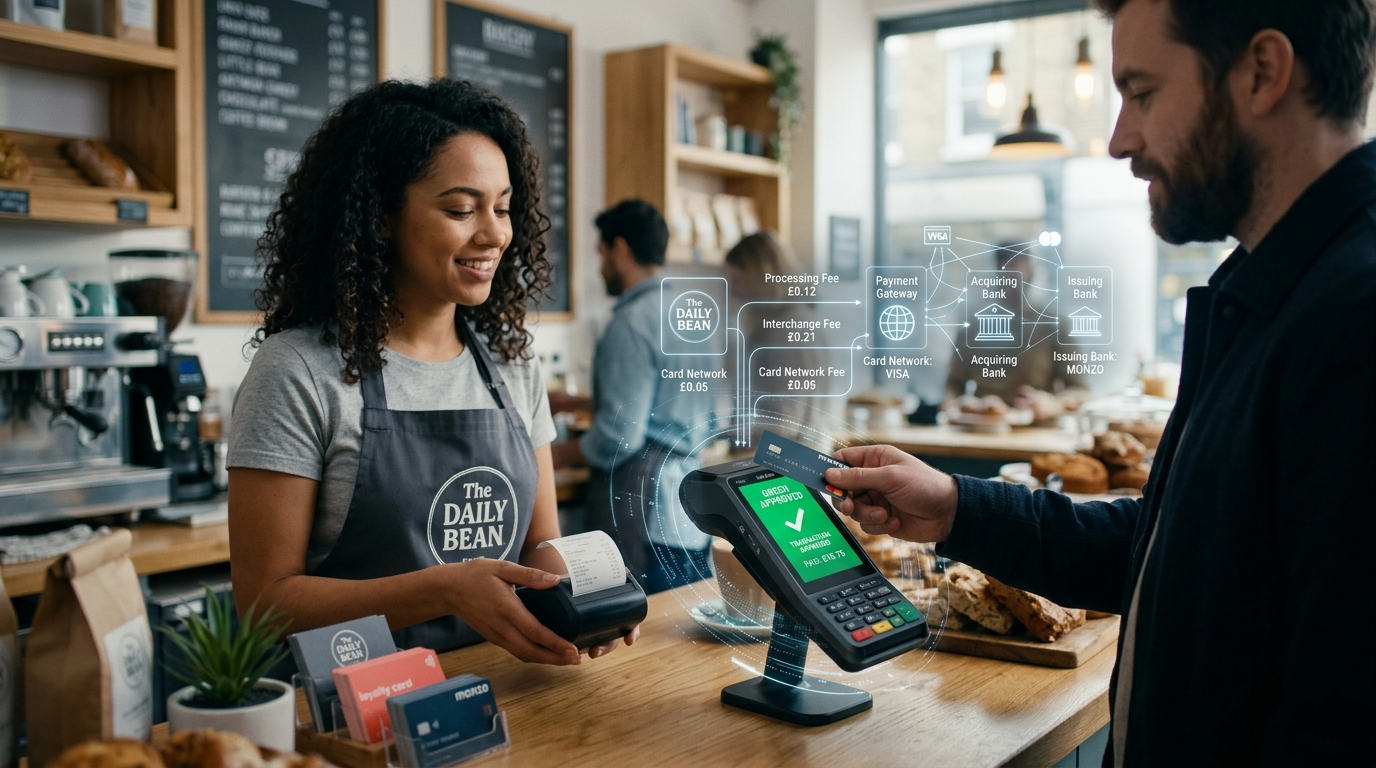
How a Debit Card Transaction Actually Moves
PIN Debit vs. Signature Debit: The Distinction That Moves Money
This is the most underutilized lever in debit card processing, and most businesses have never been told it exists.
PIN debit processing routes transactions through regional debit networks Interlink, Maestro, NYCE, and Star. The customer enters their PIN. The identity is verified at the point of entry. The network fees on these transactions are regulated and capped under the Durbin Amendment for large banks. For many transaction types, PIN debit carries meaningfully lower interchange costs than signature debit.
Signature debit works differently. The customer signs or taps on contactless transactions. The transaction routes through Visa or Mastercard, the same networks that handle credit cards, and it prices accordingly. For online sales, tap-to-pay, and digital wallet transactions, signature routing is often the default, which means you are paying credit-card-adjacent rates on debit card volume.
The decision between these two methods is not always yours to make. Terminal configuration, customer behavior, and processor setup all play a role. But knowing the difference gives you the ability to ask the right questions and to audit whether your setup is costing you more than it should.
What Controls Your Debit Processing Costs
Three things determine what you pay on every debit card transaction.
The first is the card type. Regulated debit cards issued by banks with over $10 billion in assets carry capped interchange rates under Durbin. Unregulated debit cards, issued by smaller banks, are exempt from those caps and carry higher interchange. You cannot control which cards your customers present. You can understand the split in your monthly statement.
The second is the routing method. PIN transactions route to debit networks. Signature transactions route to Visa and Mastercard. The same physical card can process two different ways depending on the terminal configuration and the customer's choice. PIN is almost always cheaper for the merchant on card-present transactions.
The third is your processor's markup. Interchange is the baseline. Your processor adds a fee on top. That fee structure, whether it is interchange-plus, tiered, or flat-rate, determines how transparent your actual costs are. Tiered pricing in particular obscures how debit and credit fees differ because everything gets bucketed into the same tiers.
Settlement Timing Is a Cash Flow Variable
Authorization is not a settlement. That gap of one to two business days for most processors is not a technical limitation. It is a policy, and it varies.
For high-volume businesses, the difference between next-day and two-day settlement is meaningful. A restaurant doing $80,000 a month is carrying a day's worth of receivables in transit at any given moment. A dealership or B2B distributor with large average tickets is carrying more.
Some processors offer same-day or next-day settlement at no additional cost. Others charge for it. Most never bring it up. If your processor has not explained your settlement timeline and what options exist, that is a gap in the conversation worth closing.
Why Declined Transactions Deserve Attention
A declined debit transaction is not just a customer inconvenience. It is a signal, and it can indicate one of three things.
Insufficient funds is the obvious one. The customer's bank denied the request because the balance was not there. Nothing to be done at the point of sale.
Bank restrictions are less obvious. Some issuing banks flag certain merchant category codes, geographic patterns, or transaction amounts as unusual activity. A legitimate transaction gets declined not because of fraud, but because the bank's algorithm raised a flag. These declines are not permanent; the customer can call their bank and resolve it, but they are lost sales at the moment.
Terminal misconfiguration is the one you can fix. Outdated firmware, incorrect MCC assignments, or improper terminal setup can produce avoidable declines. If your decline rate has crept up, terminal configuration is one of the first things to check.
The Honest Version of What You Should Be Looking At
Every month, your processor sends a statement. Most business owners do not read it in detail. That is not laziness, the statements are designed to obscure. Fee line items are split, labeled inconsistently, and bundled in ways that make comparison nearly impossible.
Debit card transactions should show lower effective rates than credit. If your statement does not reflect that distinction, your pricing structure may not be giving you the benefit of debit interchange rates. That is a conversation worth having with whoever set up your account.
At DATA ONE, the first step is always the same: look at what you are actually paying. Not what the rate sheet says. What the statement shows.
Get your free statement audit. We will break down every fee line by card type, routing method, and processor markup. Book your free audit →
Tables
These unsightly stains
Noticing brown spots on your ceiling
How Infectious Diseases Affect the Brain
Laudantium totam
Was sollte alles in einem stehen?
Accusantium doloremque
Using sound to model the world
Nemo enim ipsam
Common Skin Care Myths
Eritatis et quasi
Cards
Card Style One
Lorem ipsum dolor sit amet, consectetur adipiscing elit. Suspendisse varius enim in eros elementum tristique. Duis cursus, mi quis viverra ornare, eros dolor interdum nulla, ut commodo diam libero vitae erat. Aenean faucibus nibh et justo cursus id rutrum lorem imperdiet. Nunc ut sem vitae risus tristique posuere.
Card Style Two
It has survived not only five centuries, but also the leap into electronic typesetting, remaining essentially unchanged.
It is the system that transfers money from a customer's bank account to your business account when a debit card is used for payment. The transfer involves your customer's bank, your bank, a payment processor, and a card network. Each party plays a role in approving and settling the transaction.
How long does debit card payment processing take to settle?
Authorization is nearly instant. Settlement the actual deposit into your account typically takes one to two business days, depending on your processor's policies and your bank. Some processors offer faster settlement. Most don't explain that option unless asked.
What is the difference between PIN debit and signature debit, and why does it matter?
PIN debit routes through regional debit networks and typically carries lower fees for the merchant, especially on regulated cards subject to Durbin Amendment caps. Signature debit routes through Visa or Mastercard and often prices closer to credit card rates. For card-present transactions, PIN routing is usually the more cost-effective option. Whether your terminal is configured to prioritize it is a question worth asking.
Why am I seeing similar rates for debit and credit on my statement?
This is common with tiered pricing structures. Tiered pricing buckets transactions into qualified, mid-qualified, and non-qualified categories and applies a flat rate to each bucket regardless of whether the underlying transaction was debit or credit. This structure eliminates the cost advantage of debit. Interchange-plus pricing shows the actual card-by-card cost breakdown.
What should I do if my debit decline rate seems high?
Start with your terminal configuration. Outdated firmware, incorrect merchant category codes, and improper setup are common causes of avoidable declines. If configuration is not the issue, look at whether bank restrictions or card type patterns are involved. A payment professional can run a decline analysis from your processing data.
Brooklyn Simmons
Blocks/Grid
Fusce at sapien turpis. Aliquam at purus posuere, mattis sapien nec, dignissim ipsum. Cras ac auctor eros, sagittis euismod ante. Nunc non luctus orci. Vivamus ultrices cursus nisi sed vehicula.
Proin dapibus, sapien a suscipit sodales, justo velit placerat quam, sit amet efficitur nunc est congue quam. Phasellus varius congue tellus, non dictum ligula consectetur eu. Nam lobortis varius eros. Nulla diam augue, suscipit id pellentesque in, tristique id sapien. Vestibulum congue lorem ac turpis pulvinar ultricies.
Mauris tristique, urna hendrerit ornare viverra, diam nibh vestibulum nulla, sit amet porttitor massa magna at elit. Curabitur nec diam ac nulla interdum ultrices vel non nisi. Nunc ut vehicula mauris. Ut facilisis cursus hendrerit. Suspendisse facilisis auctor nibh sit amet tempus. Sed scelerisque sit amet lectus tristique varius.
Lorem ipsum dolor sit amet, consectetur adipiscing elit. Suspendisse varius enim in eros elementum tristique. Duis cursus, mi quis viverra ornare, eros dolor interdum nulla, ut commodo diam libero vitae erat. Aenean faucibus nibh et justo cursus id rutrum lorem imperdiet. Nunc ut sem vitae risus tristique posuere.
Most businesses don’t know the true cost of debit card processing. Here’s how the system works and where hidden fees quietly impact your profit margins
Courtney Henry
May 6, 2026
There are many variations of passages of Lorem Ipsum available, but the majority have suffered alteration in some form,
Oops! Something went wrong while submitting the form.
Guest
6 hours ago
Lorem ipsum dolor sit amet, consectetur adipiscing elit. Suspendisse varius enim in eros elementum tristique. Duis cursus, mi quis viverra ornare, eros dolor interdum nulla, ut commodo diam libero vitae erat. Aenean faucibus nibh et justo cursus id rutrum lorem imperdiet. Nunc ut sem vitae risus tristique posuere.
Oops! Something went wrong while submitting the form.
Guest
•
6 hours ago
Lorem ipsum dolor sit amet, consectetur adipiscing elit. Suspendisse varius enim in eros elementum tristique. Duis cursus, mi quis viverra ornare, eros dolor interdum nulla, ut commodo diam libero vitae erat. Aenean faucibus nibh et justo cursus id rutrum lorem imperdiet. Nunc ut sem vitae risus tristique posuere.
Ready to Build the Right Payment System for Your Business?
Speak with a Data One payments specialist to design a solution aligned with how your business operates — from payments and POS to software and growth tools.




.svg)