Every Lost Sale Starts With the Wrong Mobile Card Reader
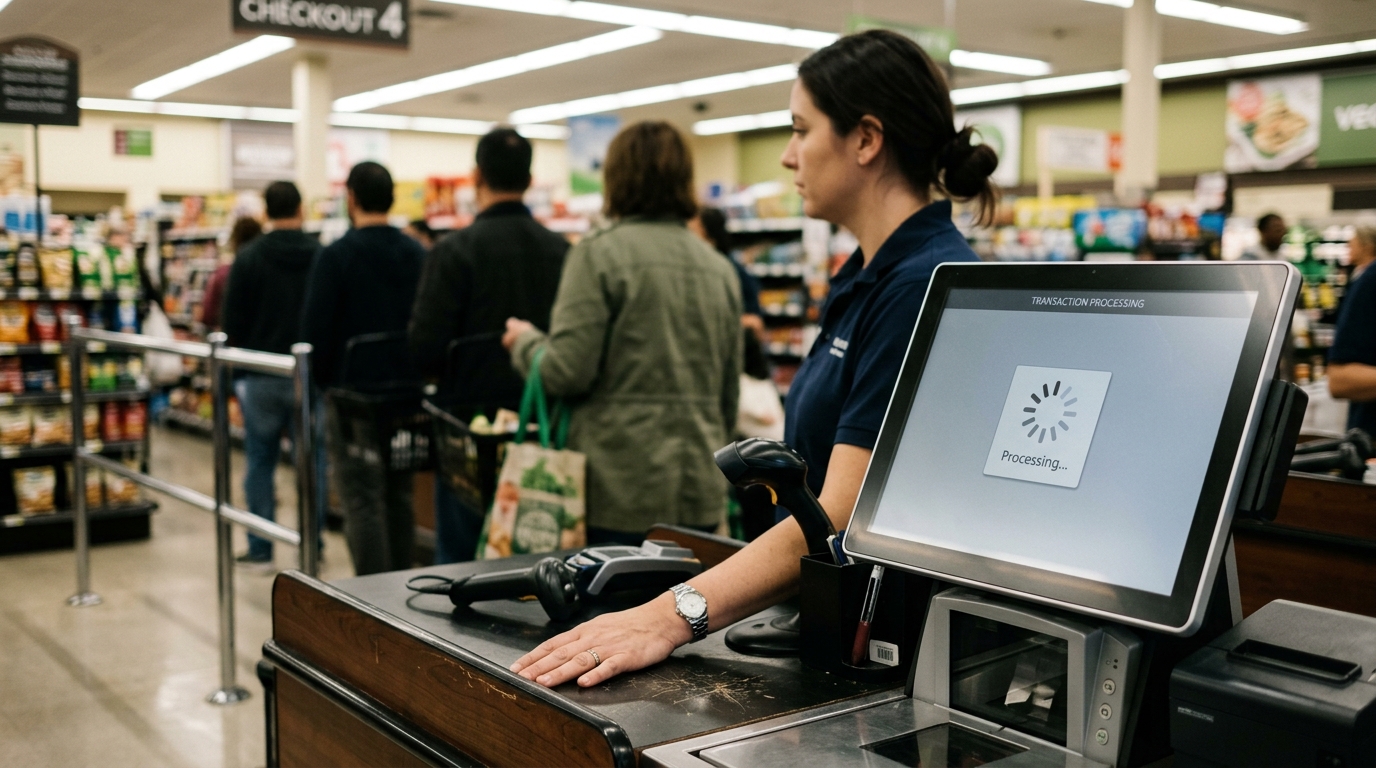
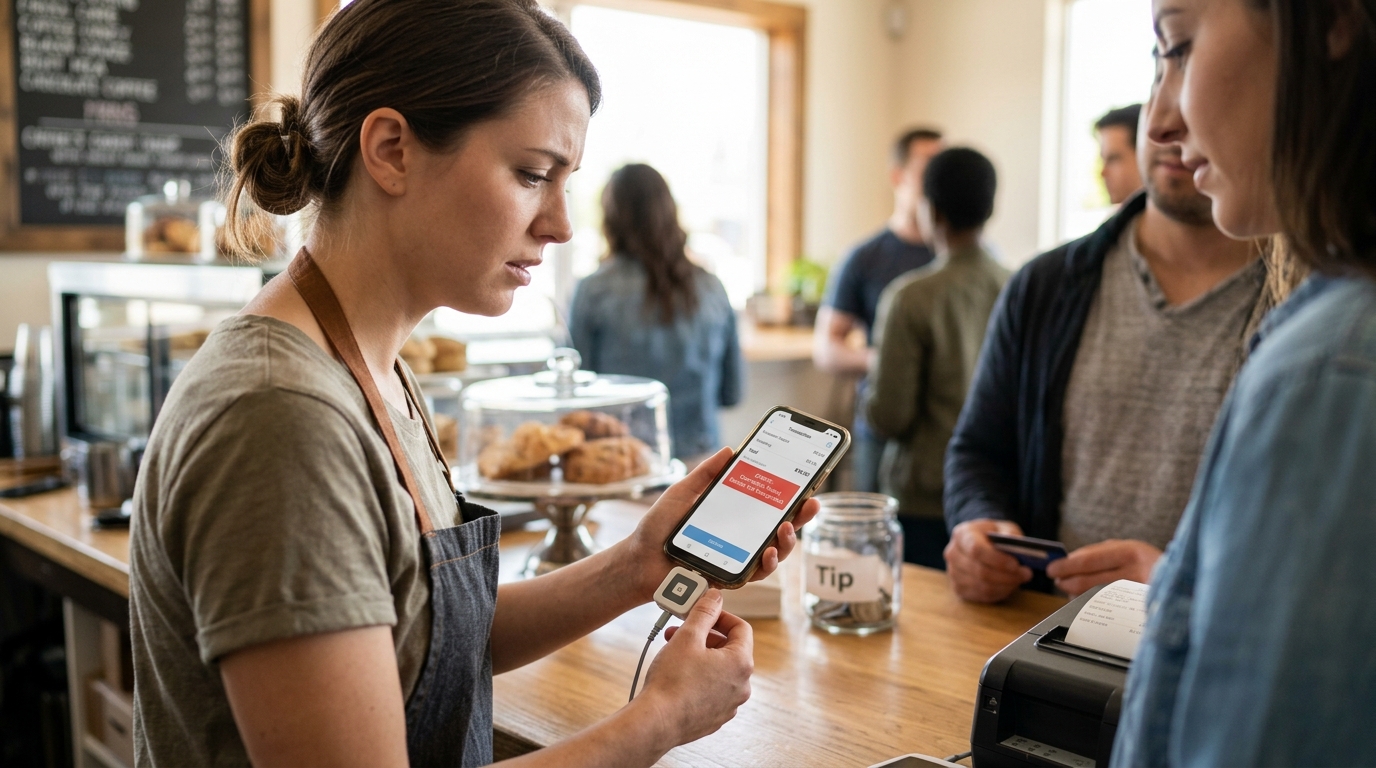
You watched the customer pull out their card. You watched them stand there while your payment terminal buffered, or declined because it couldn't connect, or worst of all you had to tell them you only take cash because your portable card reader died between jobs. The sale was gone in ten seconds. The customer was gone in thirty.
A mobile card reader is not a nice-to-have accessory for field-based or high-volume businesses. It is the last line between a completed transaction and lost revenue. Yet most small business owners select their wireless card terminal the same way they pick a cell phone case: whatever ships fastest, whatever comes bundled with the software they already use. That approach is costing them real money on every shift.
Dataonems matches businesses to the payment hardware their actual operations demand, not the hardware that was easiest to bundle into a signup flow. If your current setup has cost you a single sale, it has already cost you too much.
The Business Case Against the Wrong Device
The payment hardware industry wants you to believe every bluetooth card reader is roughly the same. They are not. The differences compound across every transaction you run.
A restaurant running a weekend brunch service does not have the same hardware requirements as a HVAC technician processing a $4,000 invoice in a customer's driveway. A boutique retailer managing inventory on a tablet needs a different integration than a mobile chiropractor seeing patients at a corporate wellness event. Treating these use cases as interchangeable is how businesses end up with terminal errors during peak hours, failed EMV reads on premium credit cards, and customer-facing friction that erodes trust at the moment it matters most.
The right mobile chip reader eliminates all of that. The wrong one multiplies each problem until it becomes a pattern.
What a Mobile Card Reader Actually Needs to Do
Accept Every Payment Method Without Friction
A smart card reader in 2025 must handle EMV chip, magnetic stripe, and NFC contactless payments including Apple Pay, Google Pay, and Samsung Pay without requiring the customer to try twice. Contactless adoption has moved from novelty to expectation. Any device that fumbles that handoff introduces doubt at checkout.
Healthcare practices accepting FSA and HSA cards need readers that process those payment types cleanly without triggering additional verification steps that slow down patient check-in. Contractors collecting deposits need a device that processes keyed-in card numbers when the customer isn't physically present. Retailers running pop-up events need a reader that pairs to a smartphone in under thirty seconds and stays paired for eight hours straight.
These are not stretch requirements. They are table stakes.
Maintain a Reliable Connection in Real-World Environments
The single largest failure point for a bluetooth card reader is connectivity. Most small businesses discover this during their highest-volume moment not during setup. A wireless card terminal that depends entirely on a stable internet connection becomes a liability the instant that connection degrades.
Field service businesses electricians, plumbers, landscapers, HVAC technicians operate in environments where cellular signal is inconsistent and Wi-Fi is nonexistent. Their handheld payment device must queue and process transactions without dropping the session or requiring a full reconnection sequence between customers.
Restaurant operators running tableside service need a device that holds its Bluetooth connection across a full dining room without interference from the other devices on the floor. A dropped connection mid-transaction is not just an inconvenience. It creates a disputed charge scenario that your staff now has to manage while the dining room fills up.
Integrate With Your Actual Software Stack
A mobile card reader that does not talk to your point-of-sale, practice management, or field service software is a standalone device that creates double-entry work. Every transaction manually reconciled is time stolen from operations. Every disconnected payment record is a liability at tax time.
The market has consolidated significantly around major integrations. QuickBooks, Square, Shopify, Toast, and industry-specific platforms all have preferred hardware partners. The correct approach is not to choose hardware first, it is to confirm which devices your software certifies, then evaluate those against your field requirements.
The Specific Demands of Each Business Type
Restaurants and Food Service
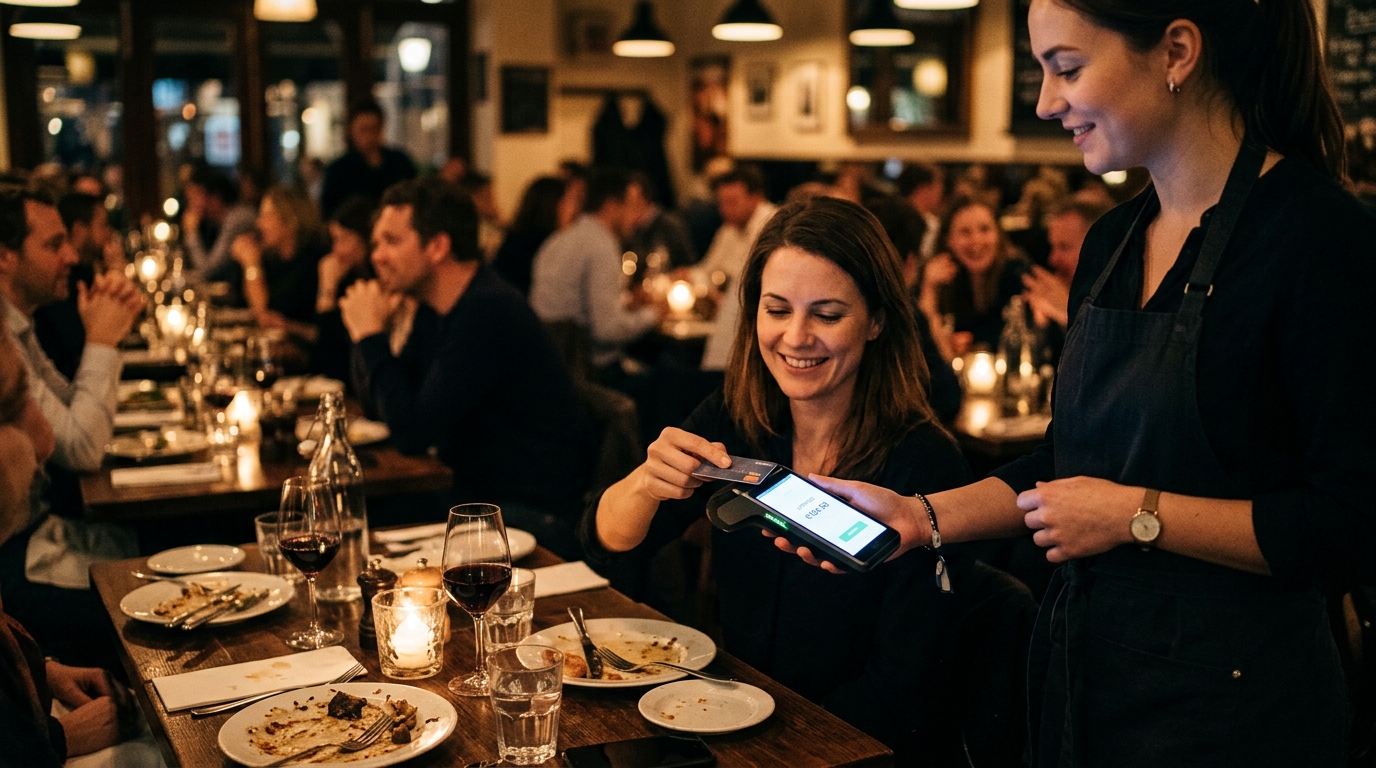
Tableside payment is no longer a differentiator; it is an operational standard in any full-service environment. The portable card reader used for tableside service must be lightweight enough for servers to carry comfortably through a shift, durable enough to survive drops on hardwood or tile, and fast enough to turn a table without adding perceived wait time.
Split payments, tip adjustment after the fact, and same-device receipts are all functional requirements, not premium features. Any device that requires a server to walk back to a fixed terminal to complete tip entry is a device that costs you turns per night.
Retailers and Pop-Up Merchants
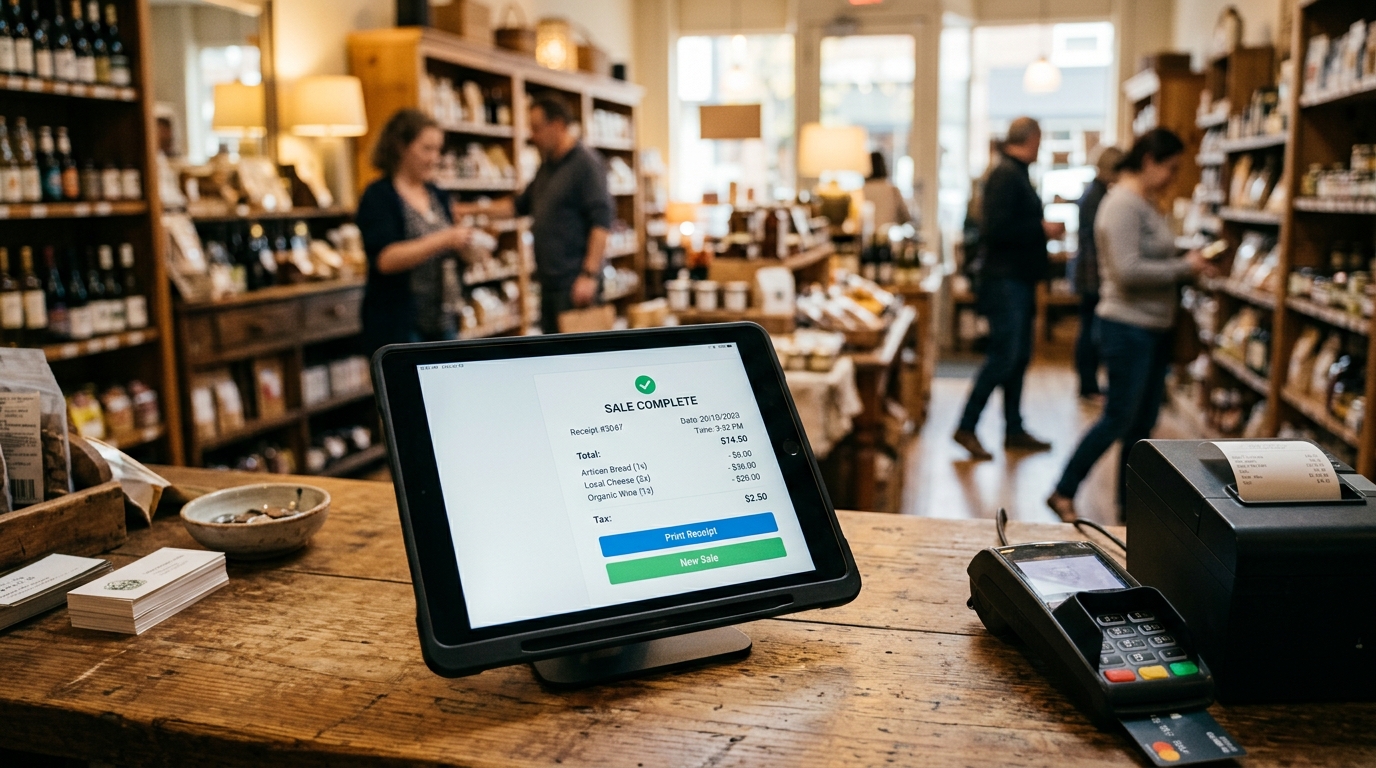
For brick-and-mortar retailers and event-based sellers, the key requirement is inventory integration. Amobile chip reader that captures the transaction but does not decrement inventory is creating a reconciliation problem every time it processes a sale.
Retailers operating at markets, trade shows, or pop-up locations also need a device with offline processing capability. Venue Wi-Fi is unreliable by design. Cellular signals in convention centers are notoriously weak. A portable card reader with local transaction storage ensures no sale is lost because the building's internet is congested.
Healthcare Practices
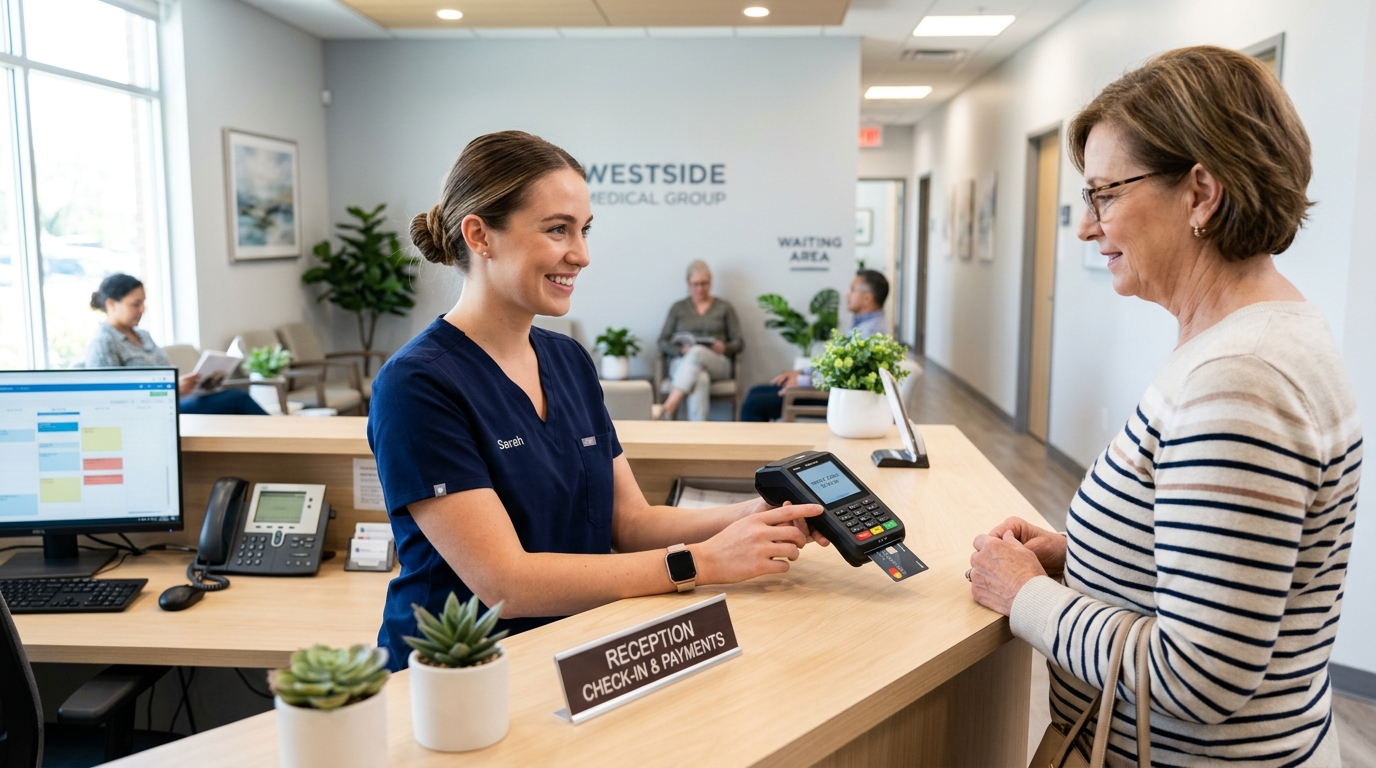
Patient payment collection is one of the more complex point-of-sale environments that exists. Co-pays at check-in, balances collected at checkout, and payment plan installments all run through the same device. The smart card reader used in a clinical environment must handle FSA and HSA card acceptance, generate itemized receipts that comply with HSA documentation requirements, and integrate with practice management software without creating a separate payment record that has to be manually posted.
Privacy is an additional constraint. Any bluetooth card reader used in a waiting room or at a shared front desk must meet HIPAA-adjacent security standards for transaction data. That means end-to-end encryption is mandatory, not optional.
Contractors and Field Services
The handheld payment device for field use has a different failure profile than any other business category. It lives in a truck, survives job sites, and processes transactions in environments with no reliable internet. Battery life is a critical spec: a device that dies at hour six of an eight-hour service day is not fit for the work.
Contractors collecting large invoices also need keyed-entry capability. Not every customer is present at the moment of the final invoice. A wireless card terminal that handles card-not-present transactions through manual entry, with appropriate security controls, is a requirement for most service-based operations.
What to Demand From Your Processor
The hardware is only half the equation. The payment processor that sits behind your mobile card reader determines what you actually keep from every transaction.
Flat-rate pricing sounds simple. It is also almost always more expensive for businesses processing above $5,000 per month, because flat-rate structures are built to be profitable at high volume for the processor, not for you. Interchange-plus pricing passes through the actual card network cost and adds a fixed processor margin. For most established small businesses, that structure produces a meaningfully lower effective rate.
Demand a clear answer on chargeback policy before you sign anything. Processors who make chargeback disputes opaque or difficult are processors who have decided chargebacks are a revenue line. Your processor should provide documentation support, dispute management tooling, and clear timelines for every chargeback regardless of the amount.
Contract terms matter as much as rates. Month-to-month processing agreements with no cancellation fees are the standard you should hold every processor to. Early termination clauses are penalties for leaving a processor who is not serving your business. Refuse them.
The Verdict
The market for mobile card readers is not short on options. It is short on businesses choosing the right one for their specific operational context. A restaurant that equips its servers with a bluetooth card reader designed for solo contractors is setting up its floor staff to fail during a Saturday dinner rush. A field service company running a consumer-grade dongle for $4,000 job completions is introducing unnecessary chargeback risk on every ticket.
The selection process is straightforward when you work it in the right order: define your field conditions first, confirm software compatibility second, validate hardware specifications third, then negotiate processor terms with the same discipline you bring to any other vendor contract.
DATA ONE works with small businesses and field service operations to match payment hardware to the actual requirements of the work, not the requirements of the hardware vendor's marketing materials. If your current portable card reader is creating friction instead of eliminating it, that is a solvable problem.Book your free operations audit →
Tables
These unsightly stains
Noticing brown spots on your ceiling
How Infectious Diseases Affect the Brain
Laudantium totam
Was sollte alles in einem stehen?
Accusantium doloremque
Using sound to model the world
Nemo enim ipsam
Common Skin Care Myths
Eritatis et quasi
Cards
Card Style One
Lorem ipsum dolor sit amet, consectetur adipiscing elit. Suspendisse varius enim in eros elementum tristique. Duis cursus, mi quis viverra ornare, eros dolor interdum nulla, ut commodo diam libero vitae erat. Aenean faucibus nibh et justo cursus id rutrum lorem imperdiet. Nunc ut sem vitae risus tristique posuere.
Card Style Two
It has survived not only five centuries, but also the leap into electronic typesetting, remaining essentially unchanged.
What is the difference between a mobile card reader and a wireless card terminal?
A mobile card reader is a compact device often dongle-sized or small enough to fit in a shirt pocket that pairs with a smartphone or tablet to process payments. A wireless card terminal is a standalone device with its own screen, keypad, and often its own cellular or Wi-Fi connectivity. Both are portable, but wireless card terminals operate independently without needing a host device. The right choice depends on whether your staff already carries devices they can pair with, or whether they need a self-contained tool.
Can a bluetooth card reader work without an internet connection?
Some bluetooth card readers support offline or store-and-forward transaction processing, which captures transaction data locally and submits it when connectivity is restored. Not all devices support this. If your business operates in low-signal environments, job sites, outdoor markets, rural locations confirm offline processing capability before purchasing.
Do I need a different mobile chip reader for contactless payments?
Most current-generation mobile chip readers support EMV chip, magnetic stripe, and NFC contactless in a single device. Older readers may process chip and swipe only, with no contactless capability. With contactless payment adoption accelerating, any new device acquisition should require NFC as a baseline.
What should I look for in a handheld payment device for a healthcare practice?
Healthcare practices need a handheld payment device that accepts FSA and HSA cards, generates itemized receipts, and uses end-to-end encryption for all transaction data. Integration with practice management software is essential to avoid manual payment posting. HIPAA does not directly regulate payment terminals, but data security obligations under HIPAA create a practical requirement for encrypted, compliant hardware.
How do I know if my portable card reader is adding unnecessary processing cost?
Pull your processing statements for the last three months and calculate your effective rate: total fees divided by total volume. If your effective rate exceeds 2.5% on card-present transactions, you have room to negotiate or switch processors. Flat-rate pricing above $5,000 monthly volume is almost always more expensive than interchange-plus. Request a fee analysis from any processor you are evaluating before committing.
Brooklyn Simmons
Blocks/Grid
Fusce at sapien turpis. Aliquam at purus posuere, mattis sapien nec, dignissim ipsum. Cras ac auctor eros, sagittis euismod ante. Nunc non luctus orci. Vivamus ultrices cursus nisi sed vehicula.
Proin dapibus, sapien a suscipit sodales, justo velit placerat quam, sit amet efficitur nunc est congue quam. Phasellus varius congue tellus, non dictum ligula consectetur eu. Nam lobortis varius eros. Nulla diam augue, suscipit id pellentesque in, tristique id sapien. Vestibulum congue lorem ac turpis pulvinar ultricies.
Mauris tristique, urna hendrerit ornare viverra, diam nibh vestibulum nulla, sit amet porttitor massa magna at elit. Curabitur nec diam ac nulla interdum ultrices vel non nisi. Nunc ut vehicula mauris. Ut facilisis cursus hendrerit. Suspendisse facilisis auctor nibh sit amet tempus. Sed scelerisque sit amet lectus tristique varius.
Lorem ipsum dolor sit amet, consectetur adipiscing elit. Suspendisse varius enim in eros elementum tristique. Duis cursus, mi quis viverra ornare, eros dolor interdum nulla, ut commodo diam libero vitae erat. Aenean faucibus nibh et justo cursus id rutrum lorem imperdiet. Nunc ut sem vitae risus tristique posuere.
The wrong card reader costs you every sale. Here's exactly what your business needs from a portable payment reader and what to demand from your processor.
Courtney Henry
May 6, 2026
There are many variations of passages of Lorem Ipsum available, but the majority have suffered alteration in some form,
Oops! Something went wrong while submitting the form.
Guest
6 hours ago
Lorem ipsum dolor sit amet, consectetur adipiscing elit. Suspendisse varius enim in eros elementum tristique. Duis cursus, mi quis viverra ornare, eros dolor interdum nulla, ut commodo diam libero vitae erat. Aenean faucibus nibh et justo cursus id rutrum lorem imperdiet. Nunc ut sem vitae risus tristique posuere.
Oops! Something went wrong while submitting the form.
Guest
•
6 hours ago
Lorem ipsum dolor sit amet, consectetur adipiscing elit. Suspendisse varius enim in eros elementum tristique. Duis cursus, mi quis viverra ornare, eros dolor interdum nulla, ut commodo diam libero vitae erat. Aenean faucibus nibh et justo cursus id rutrum lorem imperdiet. Nunc ut sem vitae risus tristique posuere.
Ready to Build the Right Payment System for Your Business?
Speak with a Data One payments specialist to design a solution aligned with how your business operates — from payments and POS to software and growth tools.


.svg)