Wireless Payment Terminals: The Infrastructure Decision Your Business Gets Once
Your payment terminal goes down on a Friday night. Not the whole system, just the Bluetooth connection. The card reader your processor bundled in with your software subscription loses its pairing to the iPad every forty minutes, and your staff has learned to restart it between tables. You have built a workaround into your floor operations because the hardware was never matched to the environment it runs in. That workaround is costing you table turns. It is costing you tips. It is costing you the kind of friction-free experience that determines whether a first-time customer becomes a regular.
This is not a technology problem. It is a selection problem. A wireless payment terminal is not a peripheral device you pick up as an afterthought when you sign a processor agreement. It is operational infrastructure, and like every other piece of infrastructure in your business, it performs exactly as well as the decision that put it there.
The market for portable checkout solutions is wide. Cellular payment terminals, wifi card machines, all-in-one smart terminals, mobile receipt printer terminals the options are abundant. What is not abundant is guidance on how to match hardware specifications to actual operational conditions. Dataonems provides that guidance and when the hardware selection is wrong, a clear path to replace it with infrastructure that actually performs under real operating conditions, not just on a spec sheet.
The Portable Payment Terminal Is Not a Commodity
The default assumption in small business purchasing is that all card readers do the same thing. They process cards. The transaction either goes through or it does not. Under that logic, the cheapest option that integrates with your POS is the right answer.
That logic fails the moment you put hardware under real operating conditions. A wifi card machine in a 3,000-square-foot restaurant with a crowded 2.4GHz band drops connections during service. A Bluetooth reader rated for 30-foot range loses signal when a server walks to a corner booth or a back patio. A consumer-grade dongle running transactions above $2,000 introduces chargeback exposure that a certified all in one smart terminal eliminates by design.
The question is not whether a terminal processes cards. The question is whether it processes cards reliably, under load, in your specific physical environment, at the transaction volume and ticket size your business generates. Those are four different specifications, and most businesses check none of them before purchasing.
Connectivity Is the Specification That Ends Businesses
Every wireless payment terminaloperates over one of three connection types: Bluetooth paired to a host device, WiFi connected to a local network, or cellular running on its own data plan. Each has a defined use case. Using the wrong one for your environment is not a minor inconvenience, it is a structural failure embedded in your checkout infrastructure.
Bluetooth is appropriate for low-volume environments where the terminal stays within the consistent range of its paired device. A boutique retail floor with one register and a stable setup is a valid Bluetooth use case. A restaurant floor with eight servers moving across two rooms and a patio is not.
WiFi terminals work in environments with managed, reliable network infrastructure. That describes most brick-and-mortar locations with a dedicated business network and a router that does not share bandwidth with customer guest access. It does not describe a job site, a farmers market, a mobile service van, or any location where your network is someone else's building.
A cellular payment terminal solves the connectivity problem for field-based and mobile operations. It carries its own data connection, processes independently of local network conditions, and performs consistently whether you are at a job site in a rural area or a trade show floor with 800 devices competing for signal. Field service companies, mobile healthcare providers, contractors, and event vendors have one correct answer: cellular. The terminal that requires a WiFi handshake to close a $5,000 job is a liability.
Software Compatibility Is Where Integration Debt Accumulates
Hardware and software in payment processing do not always agree. A terminal that is not certified for your POS platform creates integration gaps that range from annoying to operationally disqualifying. Tip prompts that do not display. Itemized receipts that do not populate. End-of-day reconciliation that requires manual correction because the terminal and the POS are counting transactions differently.
Before any hardware decision is final, confirm three things: the terminal is on the certified hardware list for your POS, the integration handles your tip and receipt workflow without workarounds, and software updates to either platform do not break the connection. That last point matters. Processors and POS vendors push updates independently. A terminal that works today needs to work after the next software release.
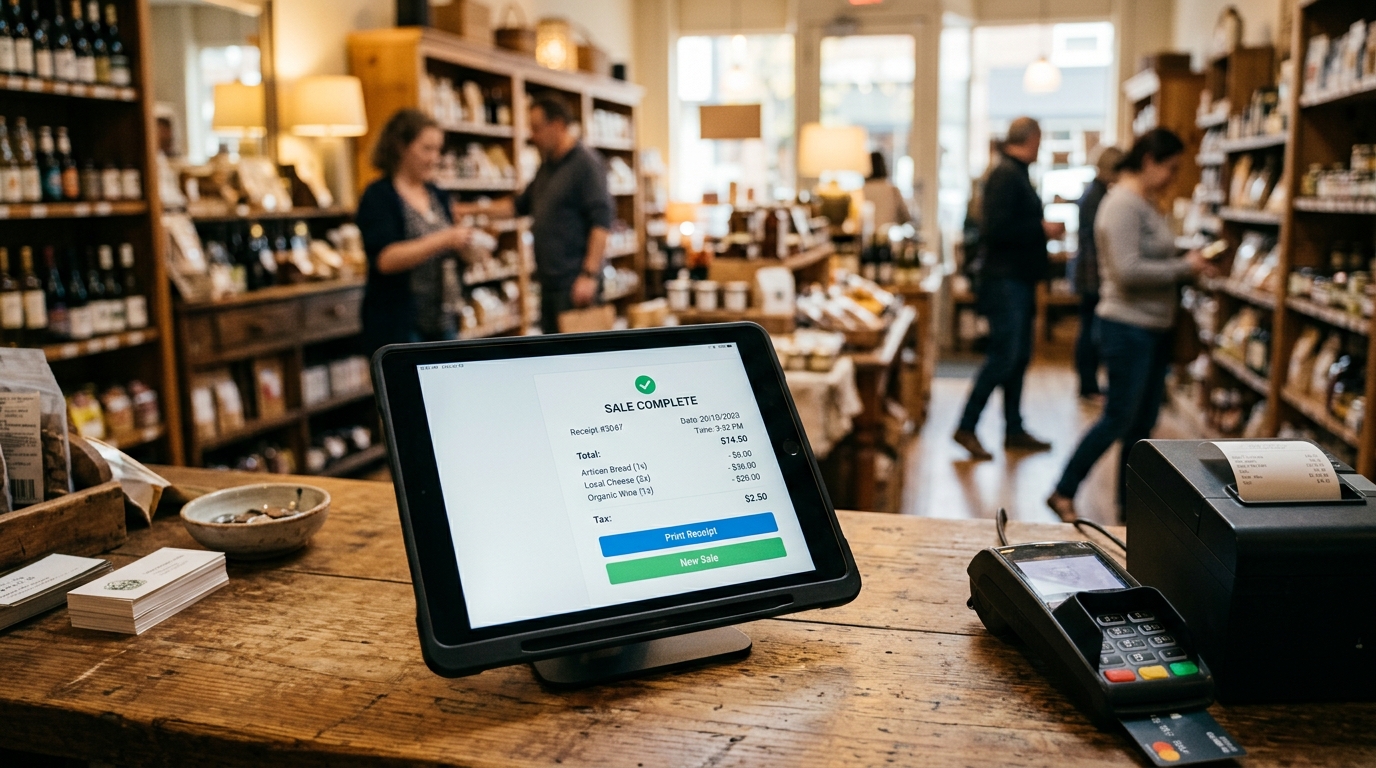
The all in one smart terminal category addresses part of this problem by consolidating POS software and payment hardware into a single device. That consolidation eliminates some integration risk. It introduces a different constraint: you are now dependent on one vendor for both layers of the stack. Understand that tradeoff before you commit.
Transaction Volume and Ticket Size Change the Hardware Requirement
A mobile receipt printer terminal that handles 20 transactions a day at an average ticket of $40 is a different piece of hardware than a terminal processing 300 transactions at $180. The physical components, the card reader mechanism, the processor, the battery degrade at rates proportional to use. A consumer-grade reader used at commercial volume fails ahead of schedule. When it fails, it does not send a warning. It fails during service.
Battery life is the specification most frequently ignored during hardware selection. A terminal that ships with an eight-hour battery rating from the manufacturer performs that rating under controlled conditions, not under continuous NFC tap and chip processing during a lunch rush. Terminals operating in high-volume environments need either a battery spec that accounts for real-world drain or a charging solution embedded in the workflow.
Ticket size introduces a separate variable: chargeback risk and authentication requirements. Consumer-grade hardware is not built to the same fraud prevention standards as commercial-grade terminals. For businesses running transactions consistently above the contactless threshold typically $100 to $250 depending on market PIN entry capability and EMV certification are not optional. They are the difference between a dispute the processor resolves in your favor and one they resolve against you.
Processor Terms Determine the Total Cost of the Hardware Decision
The terminal is not the only cost in the hardware decision. The processor agreement attached to it determines what that terminal actually costs per transaction, per month, and per dispute. Businesses that select hardware based on upfront cost and ignore the processing rate structure they are locking into routinely pay three to five times more over a two-year contract than they would have under a negotiated agreement.
Secure wireless checkout is a marketing phrase. As a contractual standard, it means nothing unless the processor agreement specifies the security certification level, the chargeback liability terms, and the fraud resolution process. Before signing, confirm the terminal is PCI DSS compliant, identify whether your contract carries a PCI non-compliance fee if the terminal falls out of certification, and understand the dispute resolution timeline.
Hardware bundling where the processor subsidizes the terminal cost in exchange for rate lock-in is the most common source of overpayment in small business payment processing. The terminal appears free or deeply discounted. The processing rate carries the margin. Over 24 months at volume, that subsidized terminal costs more than any commercial-grade hardware purchased outright under a negotiated rate structure.
The Verdict
There is no universally correct wireless payment terminal. There is only the correct terminal for your operational context, your volume, your environment, your ticket size, your software stack, and your processor terms. Businesses that select hardware without working through those variables are not making a neutral decision. They are accepting operational risk on every shift.
Define your field conditions. Confirm software compatibility. Validate hardware specifications. Negotiate processor terms. That sequence, executed in order, produces a payment infrastructure that performs under real operating conditions not just on the spec sheet.
DATA ONE works with small businesses and field operations to match payment hardware to actual requirements. If your current terminal is creating friction instead of eliminating it, that is a solvable problem with a clear starting point. Book your free operations audit →
Tables
These unsightly stains
Noticing brown spots on your ceiling
How Infectious Diseases Affect the Brain
Laudantium totam
Was sollte alles in einem stehen?
Accusantium doloremque
Using sound to model the world
Nemo enim ipsam
Common Skin Care Myths
Eritatis et quasi
Cards
Card Style One
Lorem ipsum dolor sit amet, consectetur adipiscing elit. Suspendisse varius enim in eros elementum tristique. Duis cursus, mi quis viverra ornare, eros dolor interdum nulla, ut commodo diam libero vitae erat. Aenean faucibus nibh et justo cursus id rutrum lorem imperdiet. Nunc ut sem vitae risus tristique posuere.
Card Style Two
It has survived not only five centuries, but also the leap into electronic typesetting, remaining essentially unchanged.
What is the difference between a cellular payment terminal and a WiFi card machine?
A cellular payment terminal carries its own mobile data connection and processes transactions independently of any local network. A wifi card machine connects to an existing wireless network on-site. Cellular terminals are the correct choice for field service, mobile, and outdoor operations where reliable WiFi is not available. WiFi terminals work in stable brick-and-mortar environments with a dedicated business network.
What does an all in one smart terminal include?
An all in one smart terminal combines the payment processing hardware and POS software in a single device. It accepts card, contactless, and digital wallet payments, displays itemized transaction records, manages tip prompts, and prints or sends receipts. The consolidation reduces integration risk but creates single-vendor dependency across both hardware and software layers.
How do I know if my current wireless payment terminal is costing me money?
If your staff has built workarounds around your payment hardware — restarting the terminal between transactions, manually recording sales when connectivity drops, running cards twice to confirm processing your hardware is costing you money. The direct cost is transaction delay and throughput reduction. The indirect cost is customer experience degradation that drives down return visit rates.
What is a mobile receipt printer terminal?
A mobile receipt printer terminal is a portable payment device with an integrated receipt printer. It processes card and contactless payments and prints a physical receipt without requiring a separate printer or Bluetooth connection to a secondary device. It is appropriate for environments where customers expect or require a printed receipt at the point of transaction service businesses, healthcare, and field operations among them.
What should I look for in secure wireless checkout hardware?
The terminal carries current PCI DSS certification, supports end-to-end encryption on all transaction data, and meets EMV compliance standards for chip and contactless processing. Review your processor agreement for PCI non-compliance fee provisions: a certified terminal that falls out of compliance without notification can generate monthly fees. Hardware that your processor certified two product cycles ago may no longer meet current standards.
Brooklyn Simmons
Blocks/Grid
Fusce at sapien turpis. Aliquam at purus posuere, mattis sapien nec, dignissim ipsum. Cras ac auctor eros, sagittis euismod ante. Nunc non luctus orci. Vivamus ultrices cursus nisi sed vehicula.
Proin dapibus, sapien a suscipit sodales, justo velit placerat quam, sit amet efficitur nunc est congue quam. Phasellus varius congue tellus, non dictum ligula consectetur eu. Nam lobortis varius eros. Nulla diam augue, suscipit id pellentesque in, tristique id sapien. Vestibulum congue lorem ac turpis pulvinar ultricies.
Mauris tristique, urna hendrerit ornare viverra, diam nibh vestibulum nulla, sit amet porttitor massa magna at elit. Curabitur nec diam ac nulla interdum ultrices vel non nisi. Nunc ut vehicula mauris. Ut facilisis cursus hendrerit. Suspendisse facilisis auctor nibh sit amet tempus. Sed scelerisque sit amet lectus tristique varius.
Lorem ipsum dolor sit amet, consectetur adipiscing elit. Suspendisse varius enim in eros elementum tristique. Duis cursus, mi quis viverra ornare, eros dolor interdum nulla, ut commodo diam libero vitae erat. Aenean faucibus nibh et justo cursus id rutrum lorem imperdiet. Nunc ut sem vitae risus tristique posuere.
The wrong payment terminal costs you every transaction. Here's what your business actually needs from portable checkout hardware and how to choose it right.
Courtney Henry
May 6, 2026
There are many variations of passages of Lorem Ipsum available, but the majority have suffered alteration in some form,
Oops! Something went wrong while submitting the form.
Guest
6 hours ago
Lorem ipsum dolor sit amet, consectetur adipiscing elit. Suspendisse varius enim in eros elementum tristique. Duis cursus, mi quis viverra ornare, eros dolor interdum nulla, ut commodo diam libero vitae erat. Aenean faucibus nibh et justo cursus id rutrum lorem imperdiet. Nunc ut sem vitae risus tristique posuere.
Oops! Something went wrong while submitting the form.
Guest
•
6 hours ago
Lorem ipsum dolor sit amet, consectetur adipiscing elit. Suspendisse varius enim in eros elementum tristique. Duis cursus, mi quis viverra ornare, eros dolor interdum nulla, ut commodo diam libero vitae erat. Aenean faucibus nibh et justo cursus id rutrum lorem imperdiet. Nunc ut sem vitae risus tristique posuere.
Ready to Build the Right Payment System for Your Business?
Speak with a Data One payments specialist to design a solution aligned with how your business operates — from payments and POS to software and growth tools.





.svg)