Mobile Payment Processing: Get Paid Wherever the Customer Is
Your business doesn’t stop moving. Your payment system shouldn’t either.
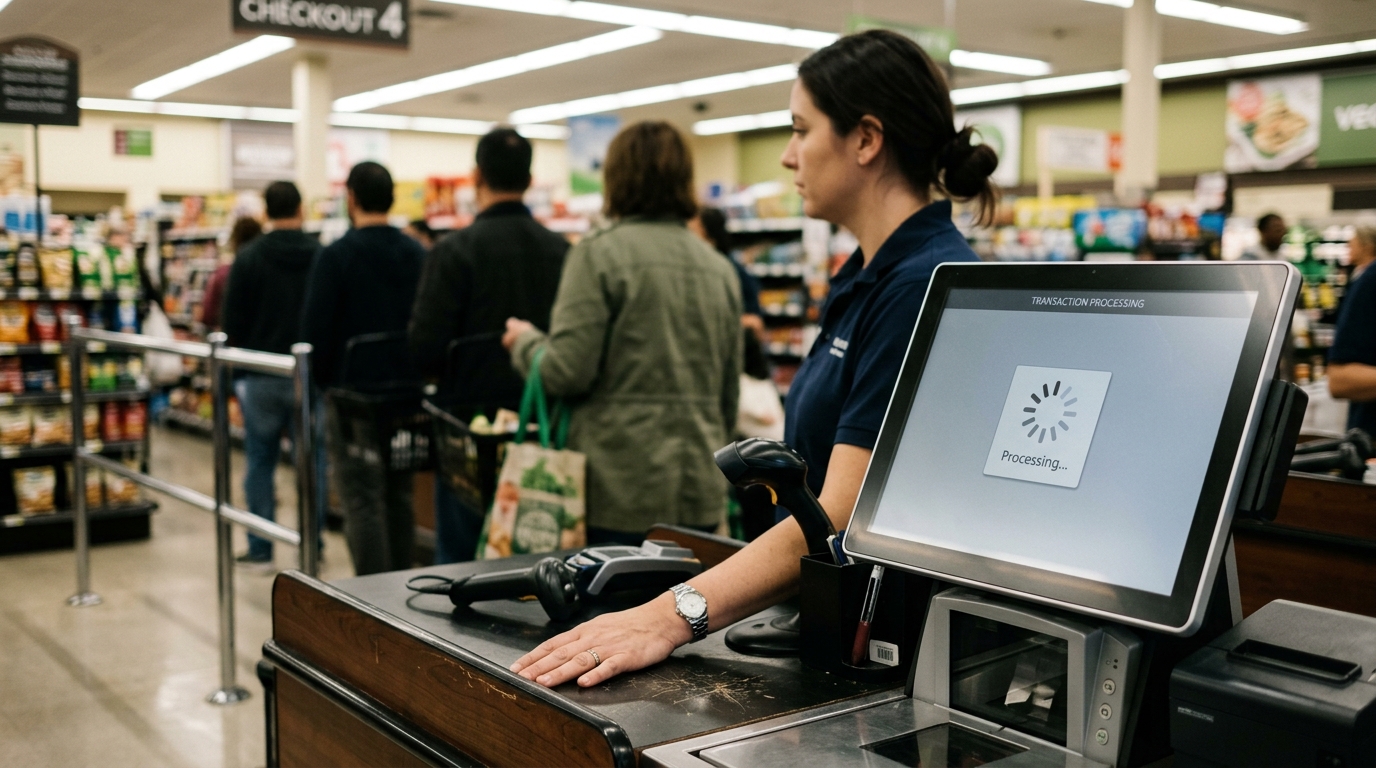
The old model locked payment collection to a fixed counter, a single machine, a specific square footage. That model assumed customers would always come to you, wait in line, and complete a transaction on your terms. That assumption is expensive.
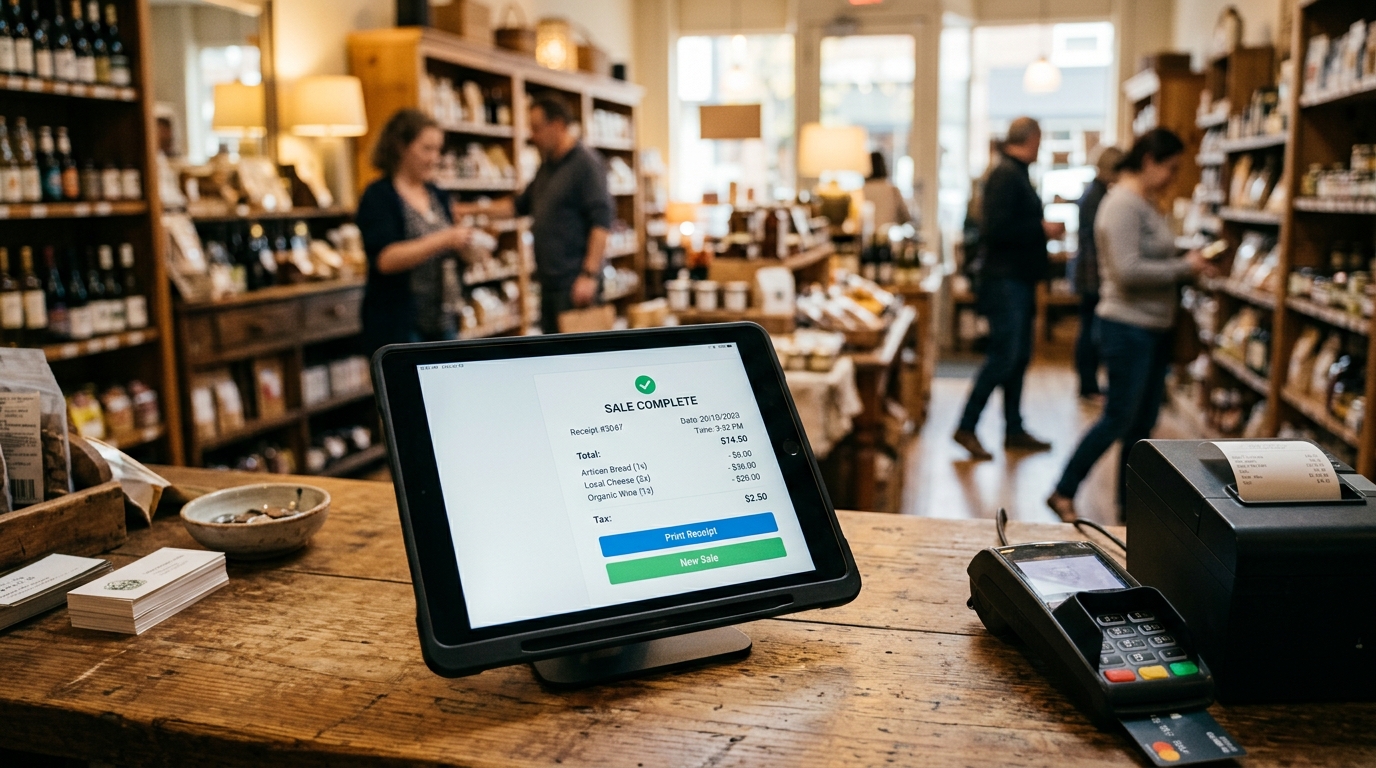
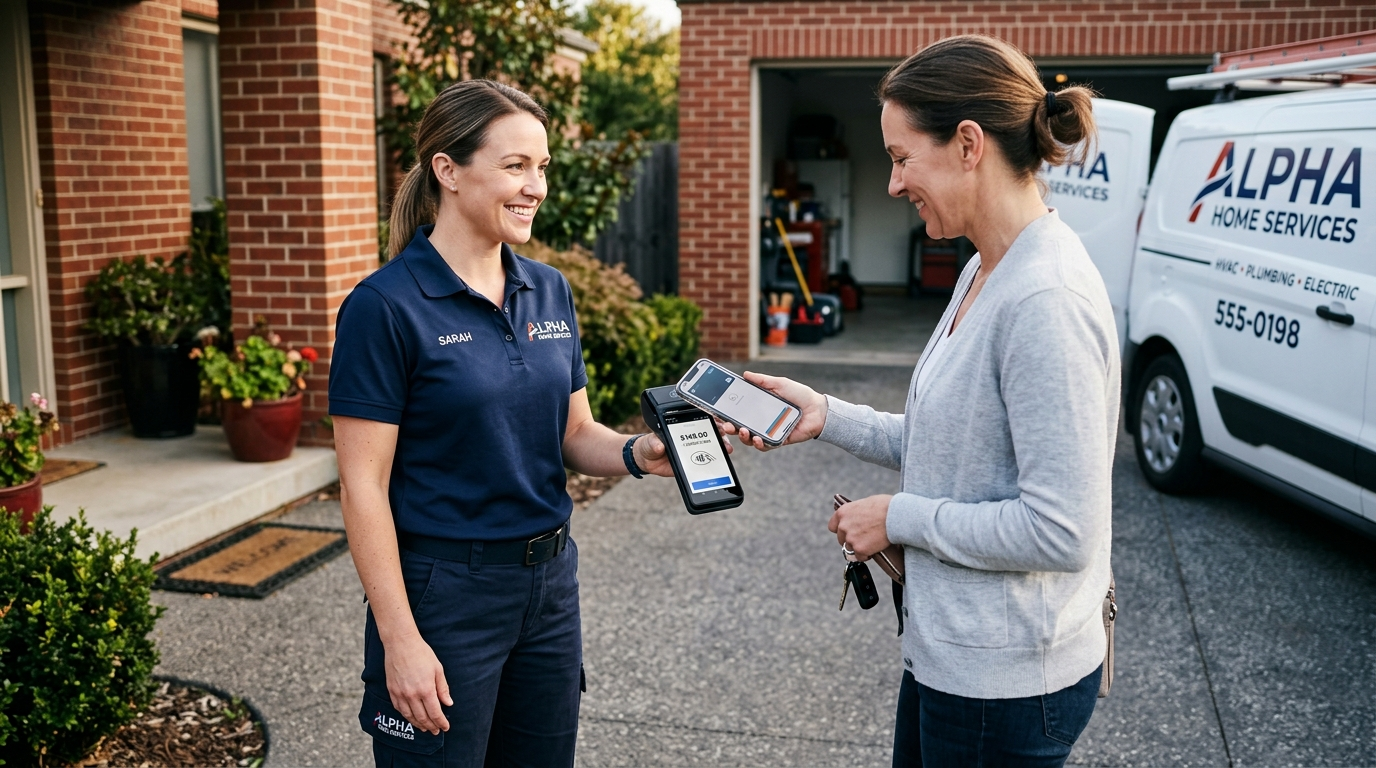
Mobile payment processing breaks that constraint. A sale can happen at the job site, the trade show booth, the restaurant table, or the customer’s front door. The transaction completes at the moment of decision, not later, not after a follow-up invoice, and not after the customer has had time to reconsider.
That’s exactly where Dataonems helps businesses by implementing mobile payment processing systems that support on-the-go transactions, faster collections, and secure real-time payments wherever business happens.
That’s the operational case for mobile payments. Here’s what actually runs underneath it.
What Mobile Payment Processing Is
Why the Timing of Payment Matters
The moment a service is completed is the moment a customer is most certain they want to pay. That certainty erodes. An invoice sent the following day arrives in a different context: a busier day, a changed mood, competing priorities.
Mobile payment processing captures that moment. The technician who completes a repair and collects payment on the spot gets paid. The one who sends an invoice gets a net-30 accounts receivable entry and a follow-up call in two weeks.
This isn't a customer behavior theory. It's a cash flow structure.
For field services, contractors, mobile vendors, event-based businesses, and table-service restaurants, the ability to close payment at the point of service isn't a convenience feature. It's a fundamental operational difference between getting paid and chasing payment.
What to Get Right Before You Choose a System
Technology is the easy part. Most mobile payment systems work. The failures come from implementation errors that are entirely preventable.
Connectivity is infrastructure. If your system depends on a cellular or Wi-Fi signal, that signal is part of your payment infrastructure. Identify where you operate, where coverage is inconsistent, and whether your system has offline capability for those gaps. A payment system that fails at a busy outdoor market during peak hours is not a payment system; it's a liability.
The right tool for the environment. A smartphone card reader is adequate for a low-volume mobile vendor. It is not adequate for a full-service restaurant floor during a Friday dinner rush. A handheld payment terminal built for speed and durability is a different investment and the right one. Choose based on the actual environment your staff works in, not the simplest setup.
Staff training is not optional. A checkout experience that feels smooth to the customer requires staff who can execute it without fumbling. Train once before deployment. Retrain when the system changes. A slow or confused checkout undermines the speed advantage mobile payments are supposed to create.
Integration with the rest of your operation. A mobile payment system that doesn't connect to your POS, your accounting software, or your reporting creates a data silo. That silo costs time every single day. Confirm integration before committing to a platform.
The Processor Behind the System Still Matters
A hardware decision is also a processing decision. The rates, fees, and funding timeline attached to mobile transactions are set by the processor behind the system, not the device manufacturer, not the app developer.
This is where most businesses stop reading and start overpaying.
The mobile payment card reader that costs $49 and 2.6% per swipe is not a simple, low-cost solution. That 2.6% is a blended rate that includes margin for the processor on top of the actual interchange cost. On a $5,000 service invoice, that's $130 in processing fees. On an automotive transaction at $45,000, it's $1,170. Not because the transaction is complex because no one looked at the statement.
The hardware decision and the processing decision should be made together, with full visibility into what the rates actually cover.
What a Properly Configured Mobile Payment Setup Looks Like
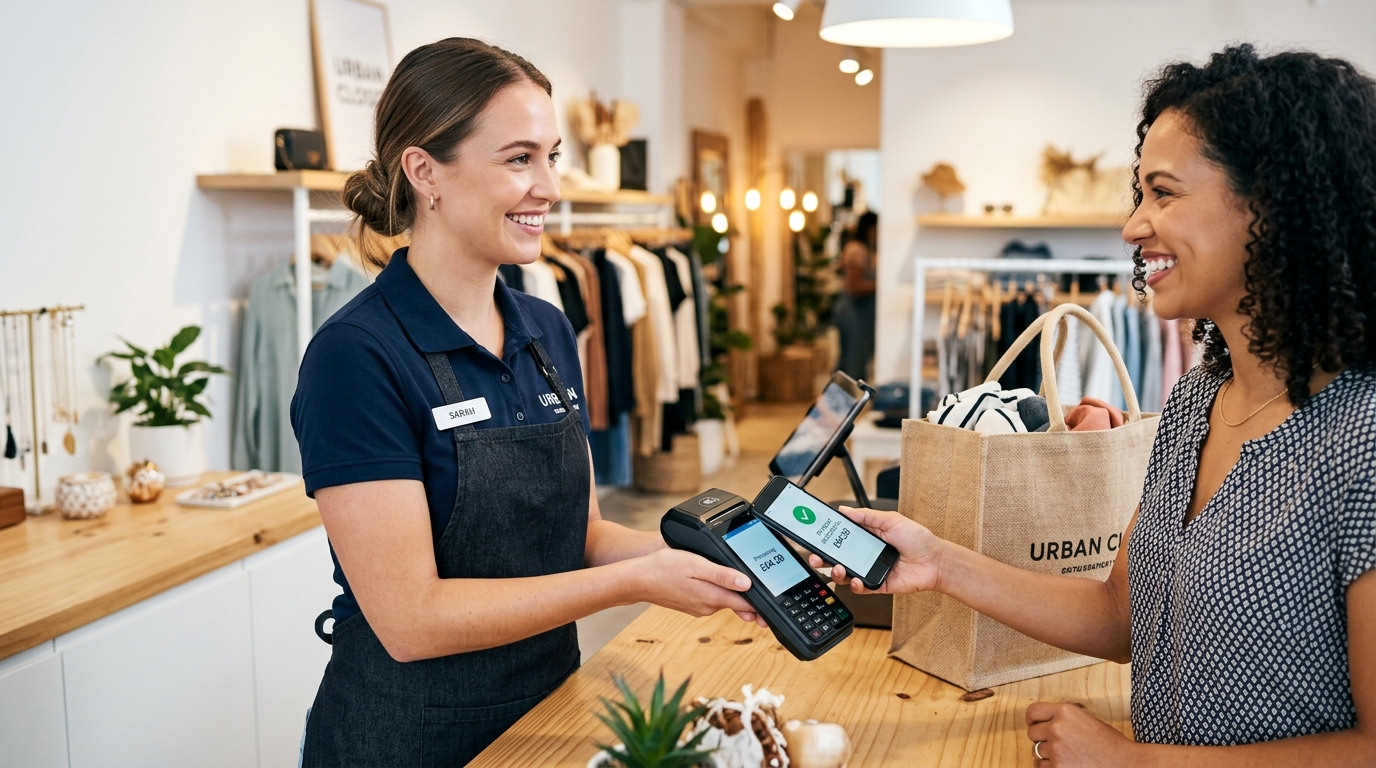
It runs quietly. Transactions complete in seconds. Staff don't think about it; they execute it. Customers don't notice the system; they notice that paying was easy.
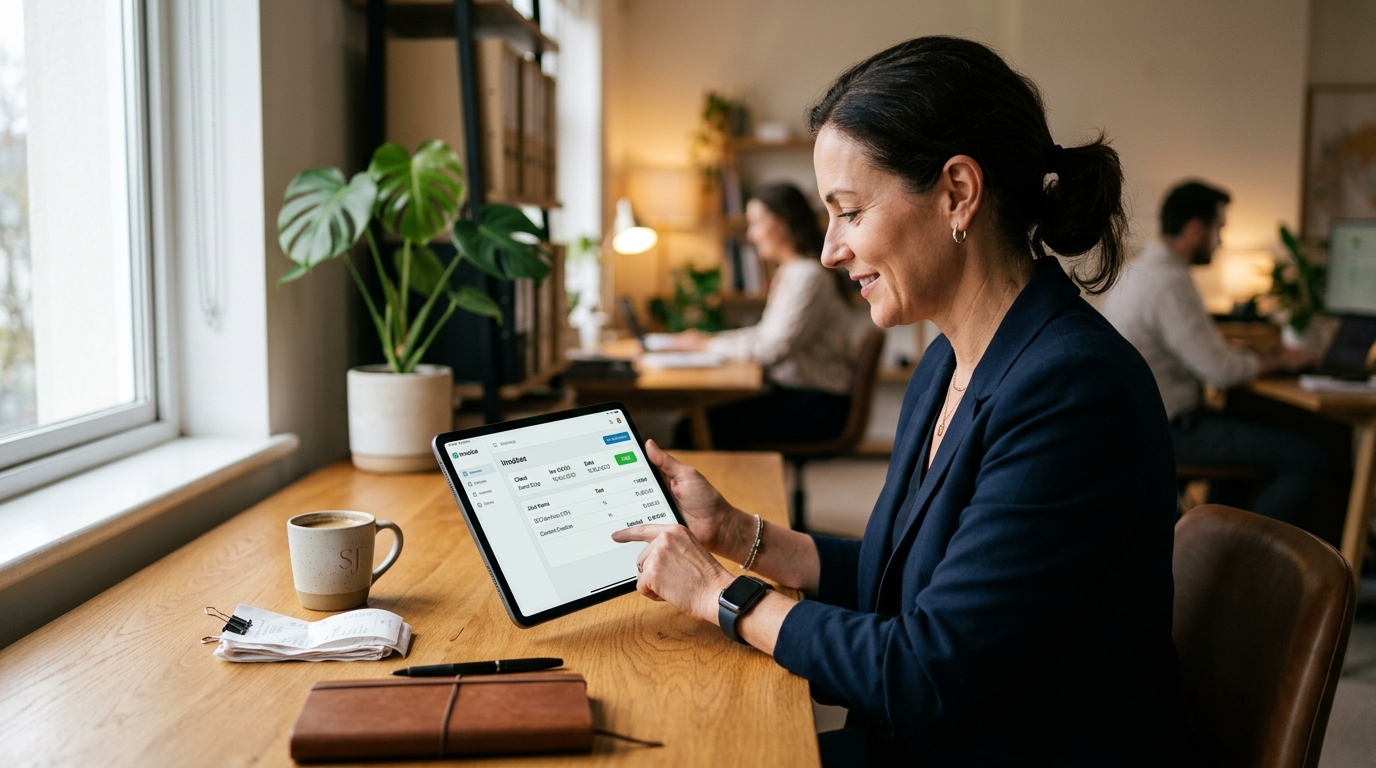
The backend tells you what you need: transaction records, settled funds on schedule, and reporting that connects to your books without manual entry. No surprises at month-end. No unexplained fees on the statement.
That's not an ambitious standard. It's the baseline. If your current mobile payment setup doesn't meet it, the problem isn't the technology; it's the processor behind it.
Lorem ipsum dolor sit amet, consectetur adipiscing elit. Suspendisse varius enim in eros elementum tristique. Duis cursus, mi quis viverra ornare, eros dolor interdum nulla, ut commodo diam libero vitae erat. Aenean faucibus nibh et justo cursus id rutrum lorem imperdiet. Nunc ut sem vitae risus tristique posuere.
Card Style Two
It has survived not only five centuries, but also the leap into electronic typesetting, remaining essentially unchanged.
What types of businesses benefit most from mobile payment processing?
Any business where payment happens away from a fixed counter. Field service and contracting businesses, table-service restaurants, mobile vendors, trade show exhibitors, delivery operations, and pop-up retail. The unifying factor is that the transaction point moves, so the payment system needs to move with it.
Is mobile payment processing secure?
Yes, when the system uses current-standard encryption and tokenization. The card data is encrypted at capture and never transmitted in readable form. A reputable processor will be PCI-compliant and will provide documentation on their security protocols. If your current provider can't answer that question clearly, that's information worth having.
What's the difference between a mobile card reader and a handheld payment terminal?
A mobile card reader attaches to a smartphone or tablet and depends on that device's connectivity and battery life. A handheld payment terminal is a dedicated device with its own hardware, built specifically for payment processing faster, more durable, and better suited for high-volume or high-ticket environments. The right choice depends on transaction volume, environment, and staff workflow.
How quickly are funds deposited after a mobile transaction?
Standard settlement is one to two business days with most processors. Some processors offer next-day or same-day funding, often at an additional fee. If cash flow timing is critical to your operation, confirm the funding schedule explicitly before you sign it should be in the merchant agreement, not in a FAQ.
Can mobile payment systems work without internet access?
Some systems offer offline mode, which stores the transaction data locally and processes it when connectivity is restored. This is a practical safeguard for businesses that operate in areas with inconsistent signals. Not all systems offer it. If you operate in low-connectivity environments, offline capability is a requirement, not a bonus feature; confirm it before you choose a system
Brooklyn Simmons
Blocks/Grid
Fusce at sapien turpis. Aliquam at purus posuere, mattis sapien nec, dignissim ipsum. Cras ac auctor eros, sagittis euismod ante. Nunc non luctus orci. Vivamus ultrices cursus nisi sed vehicula.
Proin dapibus, sapien a suscipit sodales, justo velit placerat quam, sit amet efficitur nunc est congue quam. Phasellus varius congue tellus, non dictum ligula consectetur eu. Nam lobortis varius eros. Nulla diam augue, suscipit id pellentesque in, tristique id sapien. Vestibulum congue lorem ac turpis pulvinar ultricies.
Mauris tristique, urna hendrerit ornare viverra, diam nibh vestibulum nulla, sit amet porttitor massa magna at elit. Curabitur nec diam ac nulla interdum ultrices vel non nisi. Nunc ut vehicula mauris. Ut facilisis cursus hendrerit. Suspendisse facilisis auctor nibh sit amet tempus. Sed scelerisque sit amet lectus tristique varius.
Lorem ipsum dolor sit amet, consectetur adipiscing elit. Suspendisse varius enim in eros elementum tristique. Duis cursus, mi quis viverra ornare, eros dolor interdum nulla, ut commodo diam libero vitae erat. Aenean faucibus nibh et justo cursus id rutrum lorem imperdiet. Nunc ut sem vitae risus tristique posuere.
Mobile payment processing lets your business collect payment wherever the customer is. Here's how it works and what to look for in a system that fits your workflow
Courtney Henry
May 6, 2026
There are many variations of passages of Lorem Ipsum available, but the majority have suffered alteration in some form,
Oops! Something went wrong while submitting the form.
Guest
6 hours ago
Lorem ipsum dolor sit amet, consectetur adipiscing elit. Suspendisse varius enim in eros elementum tristique. Duis cursus, mi quis viverra ornare, eros dolor interdum nulla, ut commodo diam libero vitae erat. Aenean faucibus nibh et justo cursus id rutrum lorem imperdiet. Nunc ut sem vitae risus tristique posuere.
Oops! Something went wrong while submitting the form.
Guest
•
6 hours ago
Lorem ipsum dolor sit amet, consectetur adipiscing elit. Suspendisse varius enim in eros elementum tristique. Duis cursus, mi quis viverra ornare, eros dolor interdum nulla, ut commodo diam libero vitae erat. Aenean faucibus nibh et justo cursus id rutrum lorem imperdiet. Nunc ut sem vitae risus tristique posuere.
Ready to Build the Right Payment System for Your Business?
Speak with a Data One payments specialist to design a solution aligned with how your business operates — from payments and POS to software and growth tools.



.svg)