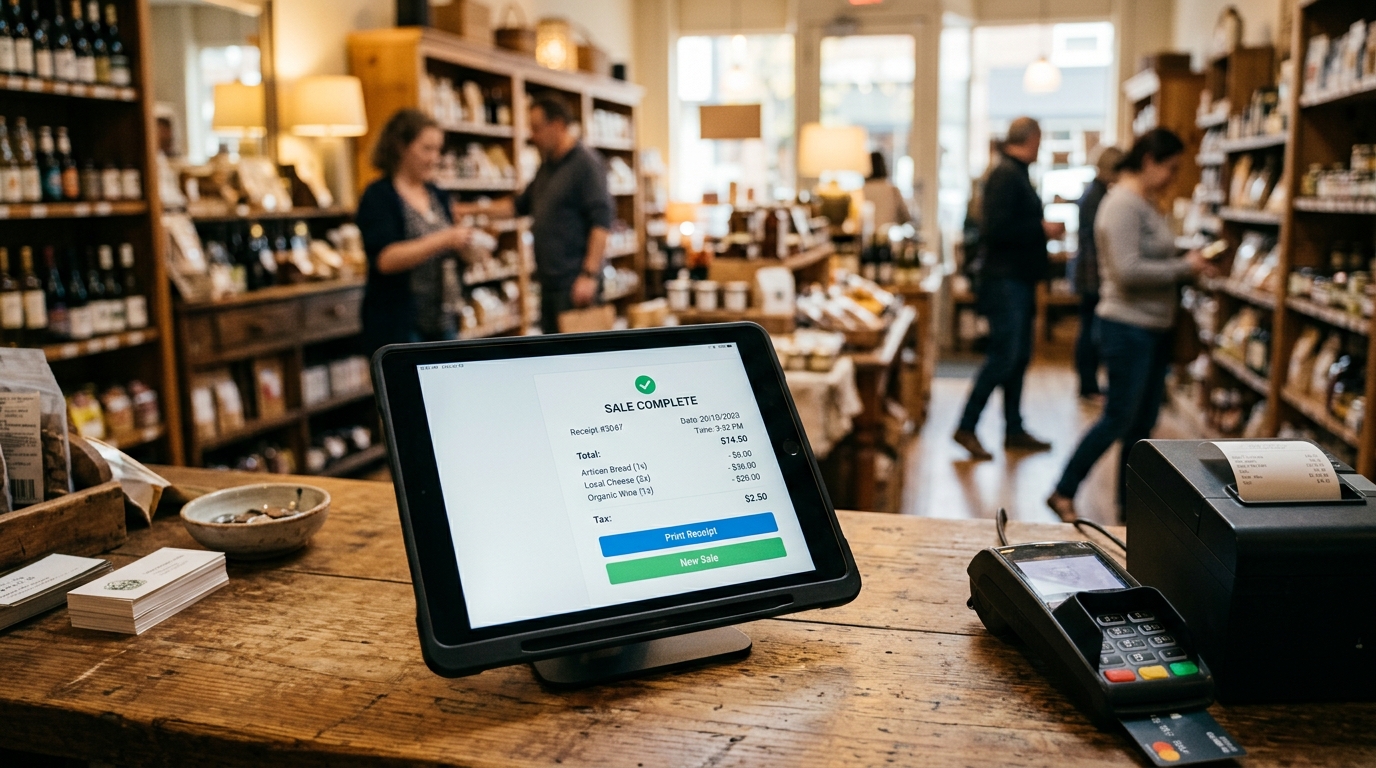
Online Payment Solutions: What You're Losing at Checkout Without Knowing It
The sale was already made. The customer found the product, added it to the cart, and started checkout. Then something in the payment process introduced friction, an extra step, a missing payment method, a checkout page that didn't load cleanly on mobile, and the cart was abandoned.
That lost transaction doesn't show up as a cost line on any statement. It shows up as revenue that never existed.
Online payment solutions are the infrastructure between a willing customer and a completed sale. Get that infrastructure wrong, and you're leaving revenue at the door every day. Get it right, and the payment process becomes invisible, exactly what it should be.
That’s exactly where Dataonems helps businesses by implementing online payment solutions that reduce checkout friction, improve mobile performance, and ensure every customer reaches a smooth, reliable, and fully optimized payment experience.
What Online Payment Solutions Actually Cover
Where Revenue Disappears in a Broken Checkout
Cart abandonment is not a mystery. The causes are documented, repeatable, and preventable.
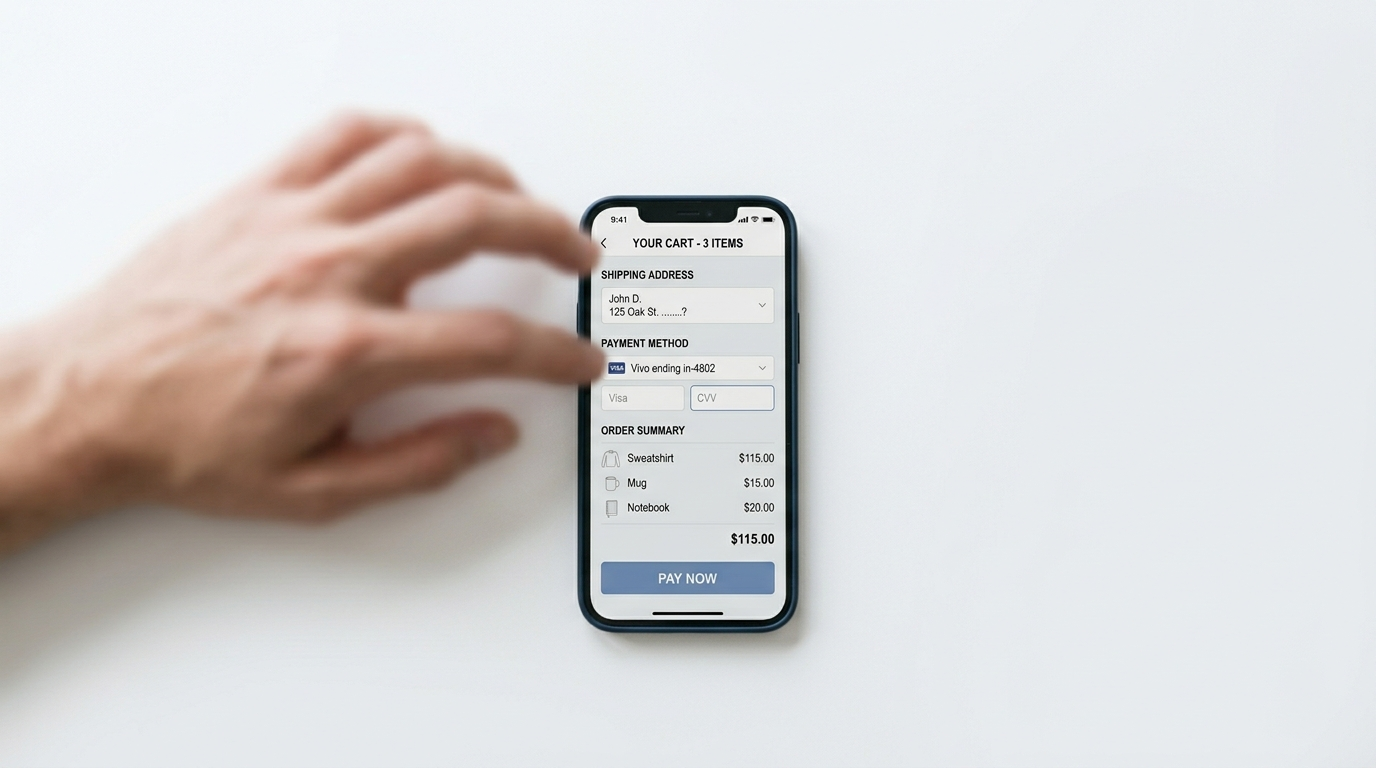
A checkout that requires manual entry of billing information every time loses customers to friction. A checkout that doesn't recognize a digital wallet loses customers who have already decided to pay, but not the way you've made available. A checkout page that loads slowly on a mobile device, where an increasing share of transactions originate, loses customers whose patience runs out before the page does.
These are not edge cases. A checkout process that isn't optimized for mobile, that doesn't support multiple payment methods, or that introduces unnecessary steps will underperform a competitor's checkout that does. The customer doesn't submit a complaint. They just don't complete the purchase.
The payment page is the last moment of the sales process. Every unnecessary obstacle at that moment is a business decision, even if nobody made it consciously.
Security Is a Revenue Issue, Not a Compliance Issue
Businesses treat payment security as a compliance obligation. It's also a conversion driver.
A customer who hesitates on the payment page because the checkout doesn't look trustworthy, because there are no visible security indicators, because the form asks for information that doesn't feel necessary, is a customer who may not complete the purchase. That hesitation is measurable. Businesses with strong security credentials and visible trust signals convert at higher rates than those without them.
The standard stack for secure online payments: SSL encryption, tokenization, PCI DSS compliance, fraud detection, and real-time monitoring. These aren't differentiators, they're the baseline. A processor or platform that can't confirm all of them clearly is not a processor you should be routing customer payment data through.
A security incident is not an operational inconvenience. It is a revenue event. Chargebacks, penalties, customer attrition, and reputational damage all attach to a single breach. The cost of the right infrastructure is a fraction of the cost of one incident.
Cash Flow Is Determined Before the Sale, Not After It
The speed at which a digital transaction settles into a merchant's account is a function of the processor, not the payment method. Two businesses accepting the same credit card through different processors can see funding timelines that differ by days.
That difference is not incidental. A business with high inventory turnover, payroll obligations, or supplier payment terms operates differently when funds settle in one day versus three. The math is simple. The average business owner doesn't run it before signing a processing agreement.
The funding timeline should be explicit in the merchant agreement. If it isn't, ask for it in writing. Standard settlement is not an answer. The answer is: next-day, two-day, or three-day, and under what conditions does it change.
Automated billing compounds this. Subscription and recurring revenue businesses that have automated billing in place collect on a predictable schedule, which means they can plan against it. Manual invoice collection introduces timing uncertainty at every billing cycle. If you operate on recurring revenue, automated billing isn't a feature upgrade. It's a structural improvement to how you manage cash.
What Scaling Actually Requires From a Payment System
Growth creates transaction volume. Transaction volume creates processing costs. The costs of a payment system that was adequate at $500,000 in annual volume are not the same as the costs at $2 million. They're not proportional. They compound.
A business that signed up for a blended rate processor when it was small, 2.9% plus 30 cents per transaction, simple and transparent, is paying a premium that was always embedded in the rate. At low volume, the difference between a blended rate and interchange-plus pricing is negligible. At scale, it is not. The processor who offered the simple rate understood this. The merchant often doesn't realize until the statement reflects a volume where the math becomes impossible to ignore.
Website payment solutions that scale correctly are built on interchange-plus or cost-plus pricing, with clear visibility into what the processor charges above the actual interchange rate. They support volume growth without rate surprises. They integrate with the accounting, CRM, and fulfillment infrastructure the business already uses, so growth doesn't create data management problems.
If you don't know your effective processing rate, the actual total cost of acceptance divided by total volume, you don't know what your payment infrastructure costs. That number belongs in your operating model.
Custom Online Payments: When Standard Isn't Enough
A subscription software company, a B2B professional services firm billing by project, a healthcare practice collecting copays, and a high-ticket retailer with installment options all have materially different payment structures. Standard checkout flows are built for the simplest use case. Custom online payments are built for the actual use case.
Subscription billing requires automated recurring charges, failed payment retry logic, and proration handling for upgrades and downgrades. B2B invoicing requires a payment portal where clients can view and pay outstanding invoices without requiring staff intervention on every transaction. High-ticket installment options require split payment logic that handles partial settlement correctly.
These aren't exotic requirements. They're the operational realities of businesses with complex revenue models. A payment system that can't accommodate them forces workarounds, manual processes, third-party tools, and reconciliation complexity that costs money and time at every billing cycle.
The right digital payment solutions are built around how the business actually collects revenue. Not how the payment platform prefers to process it.
What a Payment System Should Tell You
A properly configured payment platform produces information, not just transactions.
Which payment methods convert at the highest rate? Which products generate the most chargebacks? Which customer segments pay the fastest? Where in the checkout flow abandonment happens most frequently. What your processing costs look like by transaction type, and where the cost-per-transaction is highest.
This information is in your data now. Whether your current system surfaces it and whether you're using it to make purchasing, pricing, and marketing decisions is a different question.
Businesses that use payment data as a business intelligence input make decisions with better information than those that treat the payment system as a utility. It is a utility. It's also a data source. Use both.
Lorem ipsum dolor sit amet, consectetur adipiscing elit. Suspendisse varius enim in eros elementum tristique. Duis cursus, mi quis viverra ornare, eros dolor interdum nulla, ut commodo diam libero vitae erat. Aenean faucibus nibh et justo cursus id rutrum lorem imperdiet. Nunc ut sem vitae risus tristique posuere.
Card Style Two
It has survived not only five centuries, but also the leap into electronic typesetting, remaining essentially unchanged.
What should I look for in online payment solutions for an e-commerce business?
Start with checkout conversion: mobile optimization, guest checkout, support for digital wallets and multiple payment methods, and fast page load times. Then look at the backend: PCI compliance, fraud detection, clear funding timelines, and integration with your e-commerce platform and accounting software. Finally, look at cost: request a rate comparison on interchange-plus versus blended pricing at your current volume. The difference is often material.
What are secure online payments, and why do they matter for conversions?
Secure online payments use encryption and tokenization to protect card data from capture to settlement. They matter for conversions because customers make trust assessments at the checkout page, and a checkout that doesn't signal security loses customers who were otherwise ready to pay. SSL certificates, PCI compliance indicators, and recognizable payment badges all reduce hesitation at the payment step.
How do custom online payments work for subscription businesses?
Custom online payments for subscription businesses include automated recurring billing on a defined schedule, failed payment retry logic (dunning), proration handling for plan changes, and customer self-service portals for updating payment methods. The goal is to minimize involuntary churn revenue lost, not because a customer decided to cancel, but because a card declined and no retry logic caught it. A properly configured subscription billing system handles all of this automatically.
What is the difference between blended rate and interchange-plus pricing?
Blended rate pricing charges a single percentage on all transactions, regardless of card type or actual interchange cost. Interchange-plus pricing passes through the actual interchange rate set by the card networks and adds a fixed processor margin on top. At low volume, the difference is small. At scale, interchange-plus is almost always lower, because the blended rate is calculated to cover the processor's cost on premium and rewards cards, which carry higher interchange fees. You pay that premium on every transaction, including the low-cost ones. Ask your processor which model your account uses.
Can digital payment solutions integrate with my existing accounting software?
Yes, with the right processor and platform. The integrations that matter most are to your accounting software (QuickBooks, Xero, NetSuite), your CRM, and your fulfillment or inventory system. Before committing to a payment platform, confirm which integrations are native, which require third-party connectors, and what the data sync frequency is. Integrations that run daily are not the same as integrations that run in real time. For businesses with high transaction volume, the difference in reconciliation time is significant.
Brooklyn Simmons
Blocks/Grid
Fusce at sapien turpis. Aliquam at purus posuere, mattis sapien nec, dignissim ipsum. Cras ac auctor eros, sagittis euismod ante. Nunc non luctus orci. Vivamus ultrices cursus nisi sed vehicula.
Proin dapibus, sapien a suscipit sodales, justo velit placerat quam, sit amet efficitur nunc est congue quam. Phasellus varius congue tellus, non dictum ligula consectetur eu. Nam lobortis varius eros. Nulla diam augue, suscipit id pellentesque in, tristique id sapien. Vestibulum congue lorem ac turpis pulvinar ultricies.
Mauris tristique, urna hendrerit ornare viverra, diam nibh vestibulum nulla, sit amet porttitor massa magna at elit. Curabitur nec diam ac nulla interdum ultrices vel non nisi. Nunc ut vehicula mauris. Ut facilisis cursus hendrerit. Suspendisse facilisis auctor nibh sit amet tempus. Sed scelerisque sit amet lectus tristique varius.
Lorem ipsum dolor sit amet, consectetur adipiscing elit. Suspendisse varius enim in eros elementum tristique. Duis cursus, mi quis viverra ornare, eros dolor interdum nulla, ut commodo diam libero vitae erat. Aenean faucibus nibh et justo cursus id rutrum lorem imperdiet. Nunc ut sem vitae risus tristique posuere.
Accountants who review payment processing costs can uncover hidden fees and improve margins. Here’s what to check in financials and how to optimize them.
Courtney Henry
May 6, 2026
There are many variations of passages of Lorem Ipsum available, but the majority have suffered alteration in some form,
Oops! Something went wrong while submitting the form.
Guest
6 hours ago
Lorem ipsum dolor sit amet, consectetur adipiscing elit. Suspendisse varius enim in eros elementum tristique. Duis cursus, mi quis viverra ornare, eros dolor interdum nulla, ut commodo diam libero vitae erat. Aenean faucibus nibh et justo cursus id rutrum lorem imperdiet. Nunc ut sem vitae risus tristique posuere.
Oops! Something went wrong while submitting the form.
Guest
•
6 hours ago
Lorem ipsum dolor sit amet, consectetur adipiscing elit. Suspendisse varius enim in eros elementum tristique. Duis cursus, mi quis viverra ornare, eros dolor interdum nulla, ut commodo diam libero vitae erat. Aenean faucibus nibh et justo cursus id rutrum lorem imperdiet. Nunc ut sem vitae risus tristique posuere.
Ready to Build the Right Payment System for Your Business?
Speak with a Data One payments specialist to design a solution aligned with how your business operates — from payments and POS to software and growth tools.




.svg)