The Fixed Register Is a Relic. Here's What Replaced It.
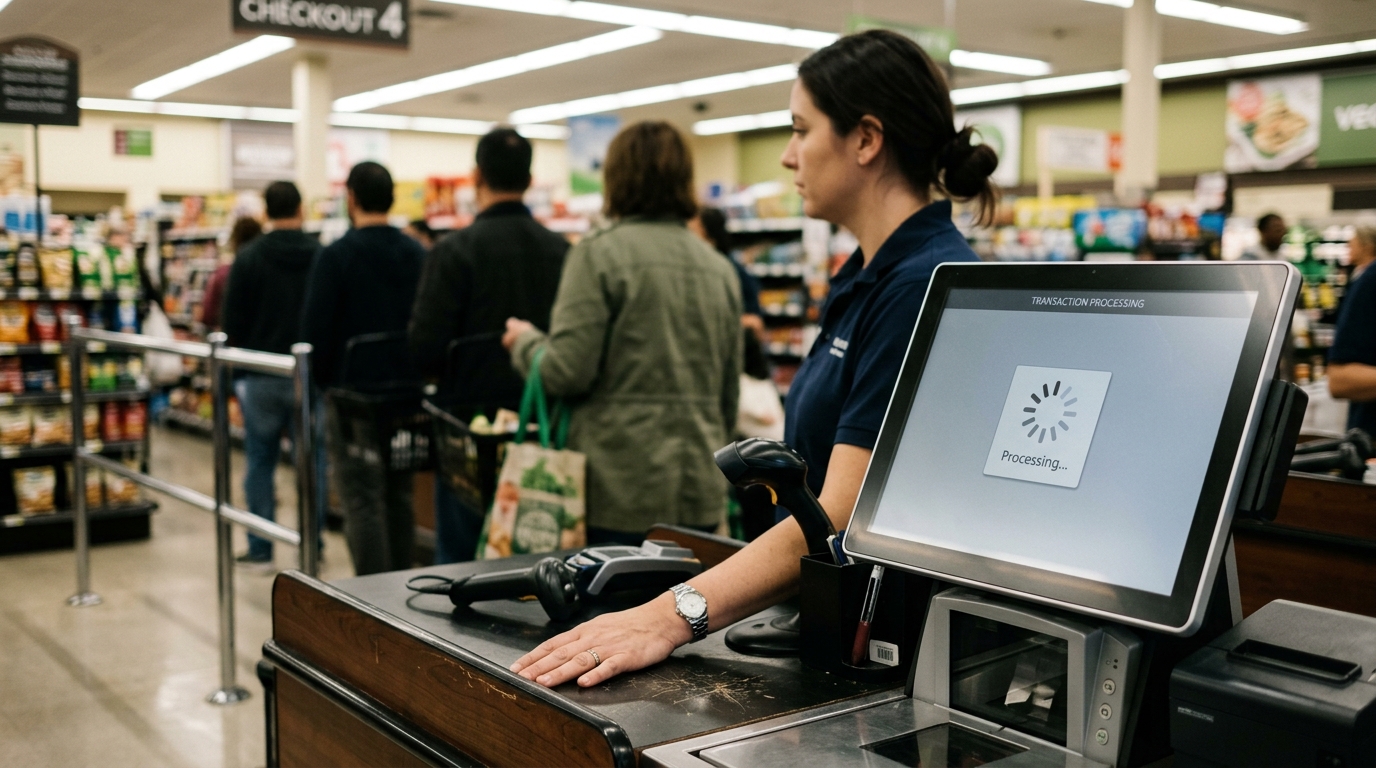
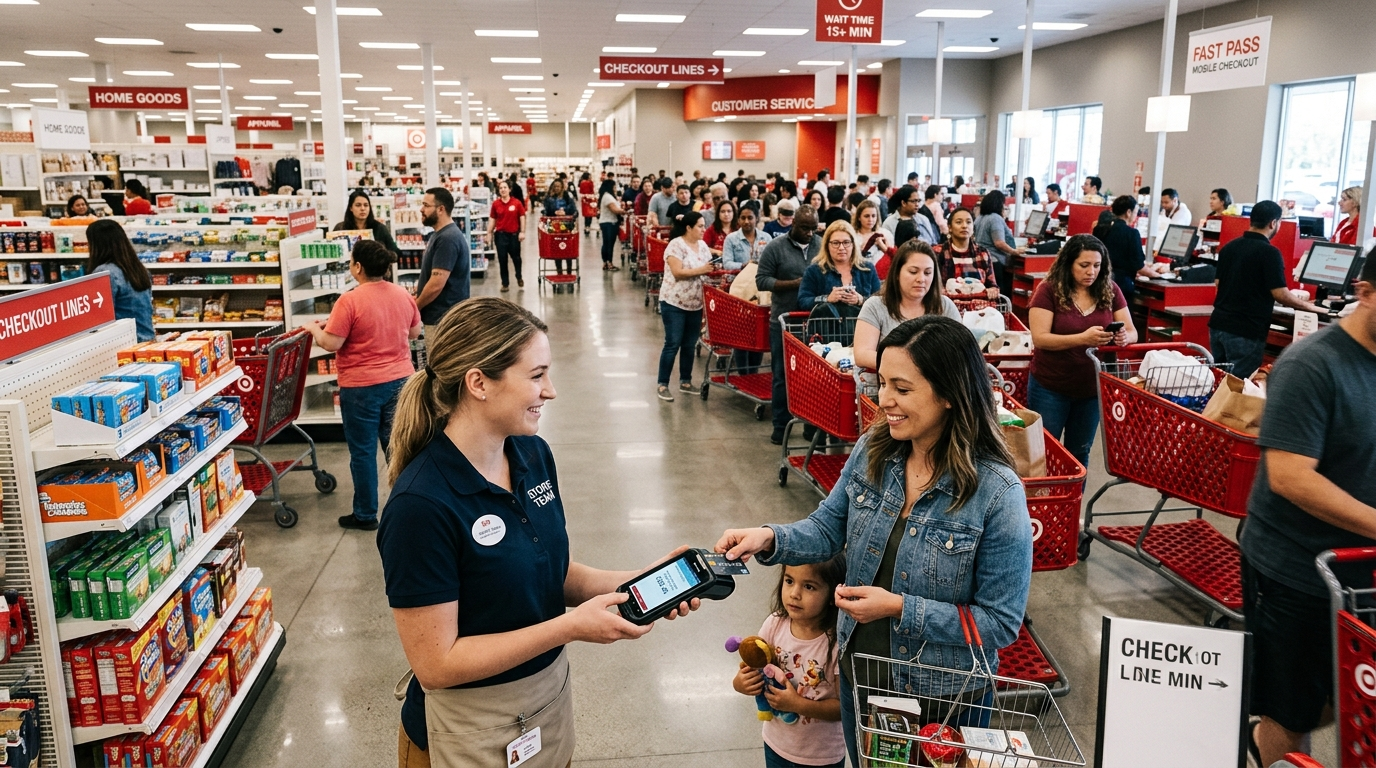
The line at the checkout is four people long. Two of them are shifting their weight. One just checked the time. Your associate is behind the counter, tied to the terminal, processing one transaction at a time while the others wait.
Fifteen feet away, there are three more customers who've been waiting to ask a question about a product. They've been waiting long enough that two of them have already put the item back and left.
That's not a staffing problem. It's a hardware problem. A fixed register model forces customer service to collapse to a single point in the store. Everyone queues. Everyone waits. The sale that should have happened on the floor never makes it to a counter.
A mobile POS system breaks that constraint. The transaction goes to where the customer is. The line disappears. The sale closes before the customer has time to reconsider.
That’s exactly where Dataonems helps retail and service businesses by implementing mobile POS systems that reduce checkout bottlenecks, improve customer flow, and allow staff to complete transactions anywhere in the store or on-site with the customer.
What a Mobile POS System Actually Is
The Business Case for Going Wireless
The argument for a wireless point of sale system isn't abstract. It shows up in measurable places.
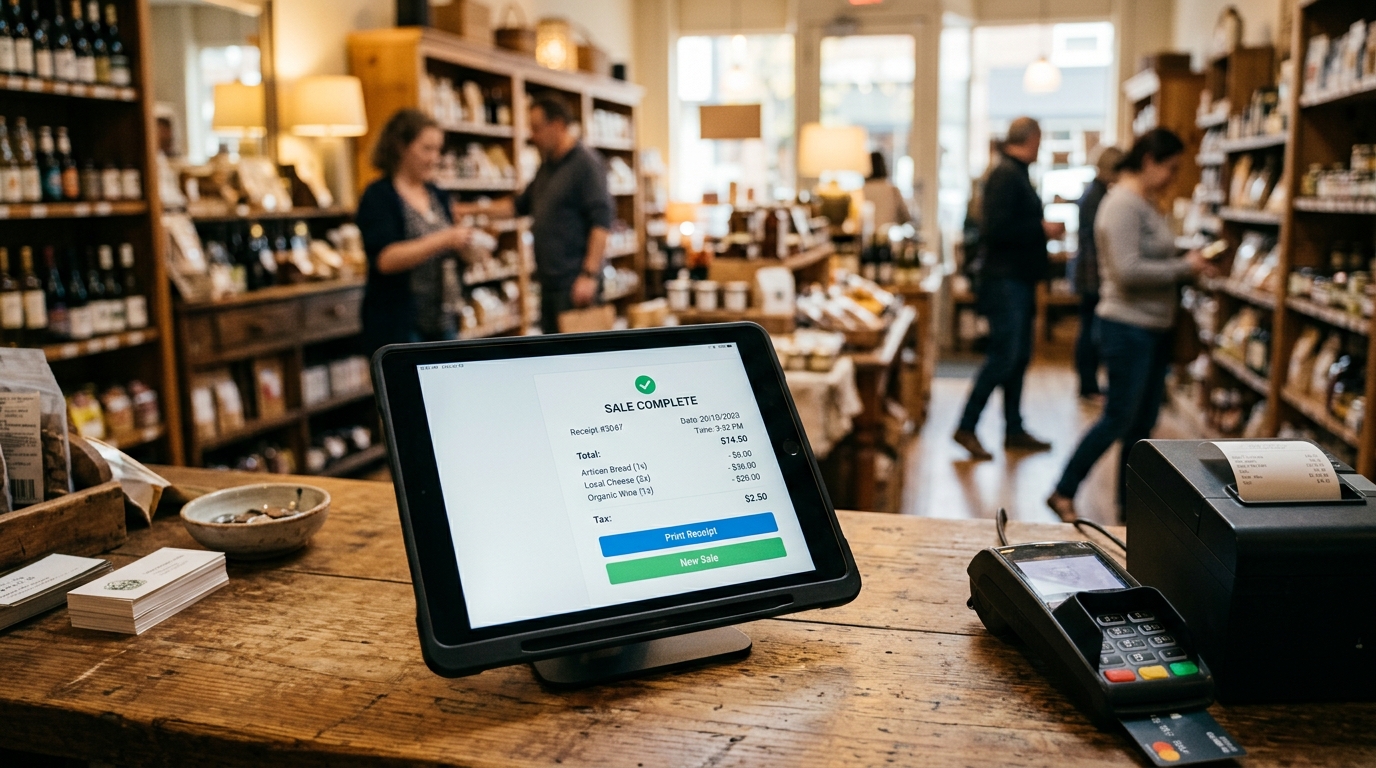
Transaction throughput. A store with one fixed register processes customers sequentially. A store where three associates carry mobile payment POS devices processes customers in parallel wherever they are in the store. Line length drops. Wait time drops. The number of transactions completed per hour goes up.
Floor conversions. The most expensive sale to lose is the one where the customer was interested enough to pick up the product but not committed enough to wait in line. An associate who can complete the transaction on the floor right there, at the moment of decision captures revenue that a counter-based model loses to friction and impatience.
Lower hardware costs. Traditional POS infrastructure requires dedicated terminals, peripherals, and fixed installation. Tablet POS software running on standard hardware costs less to acquire and less to maintain. When a device needs replacement, you replace a tablet, not a specialized terminal. Updates happen over the air, not through a service call.
Event and off-site capability. A portable checkout system is the difference between attending a trade show as a business that takes orders and one that takes card payments on the spot. Pop-ups, markets, and outdoor events become full revenue opportunities rather than brand appearances with deferred sales.
How Mobile POS Systems Work in Practice
The operational model is straightforward.
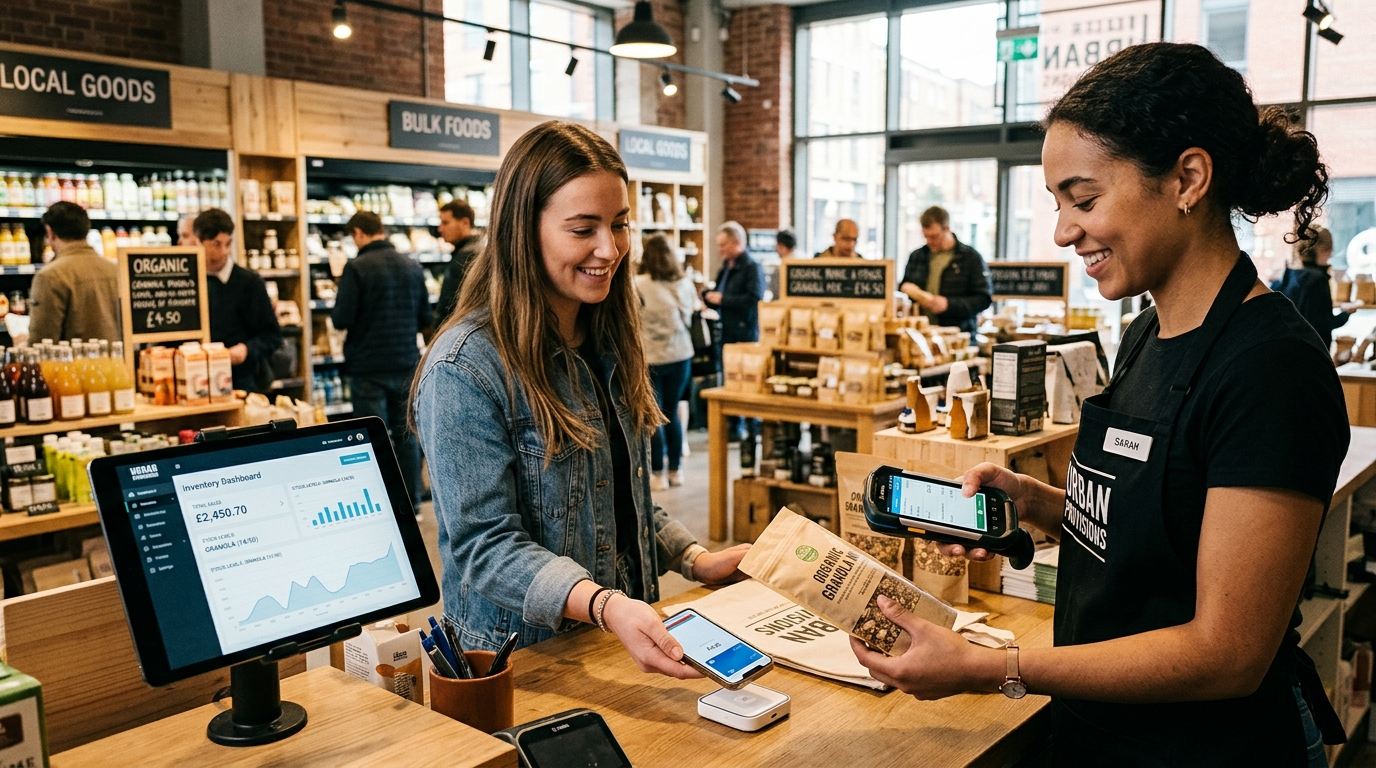
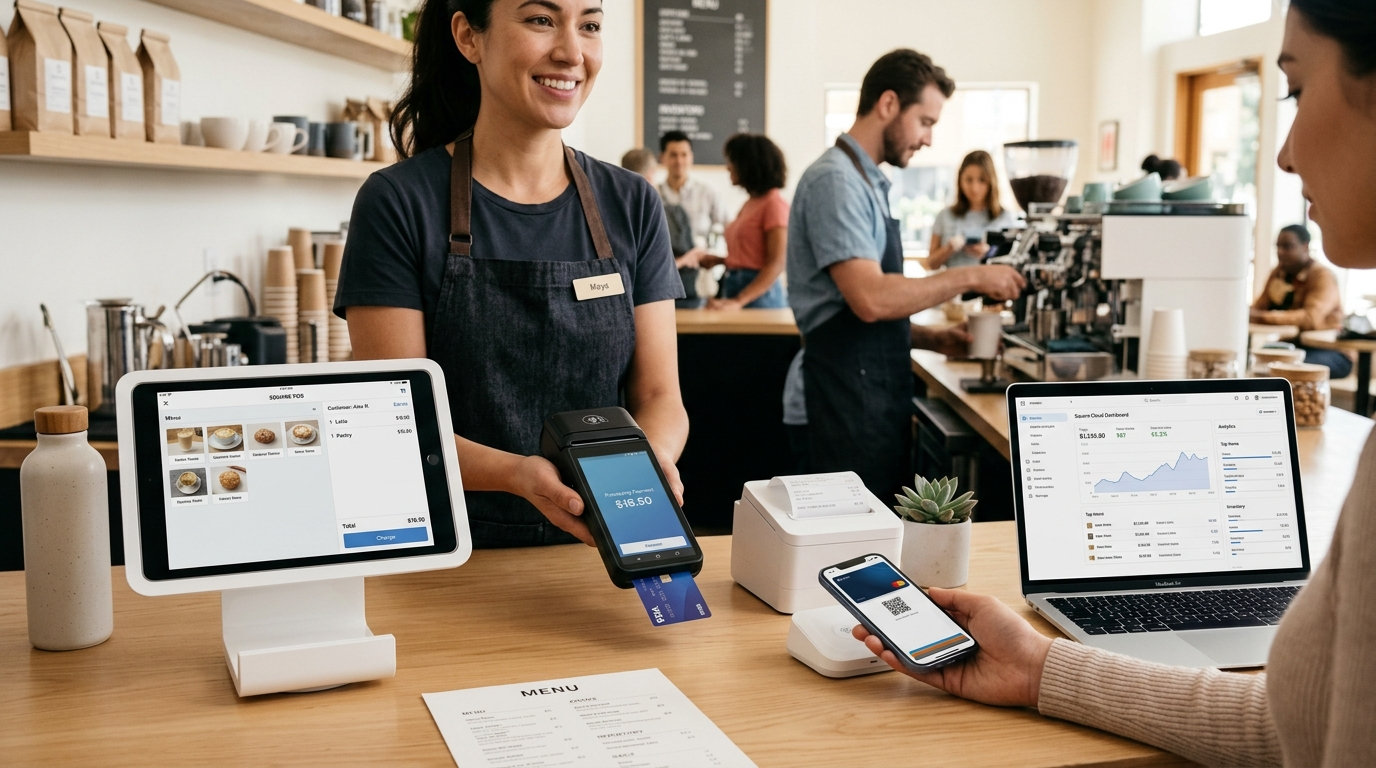
A customer selects a product. An associate uses a handheld POS terminal or tablet to scan the item, confirm the price, and process payment. The customer taps their card or phone to the card reader. The transaction is authorized in seconds. A receipt goes to the customer's email or phone.
Simultaneously, the inventory count for that item updates in the cloud. The sale appears in the reporting dashboard. If another associate on the floor checks stock for the same item, they see the updated count.
Returns work the same way. The associate handling the return processes it through the mobile device, the inventory adjusts, and the refund initiates no trip to the customer service counter required.
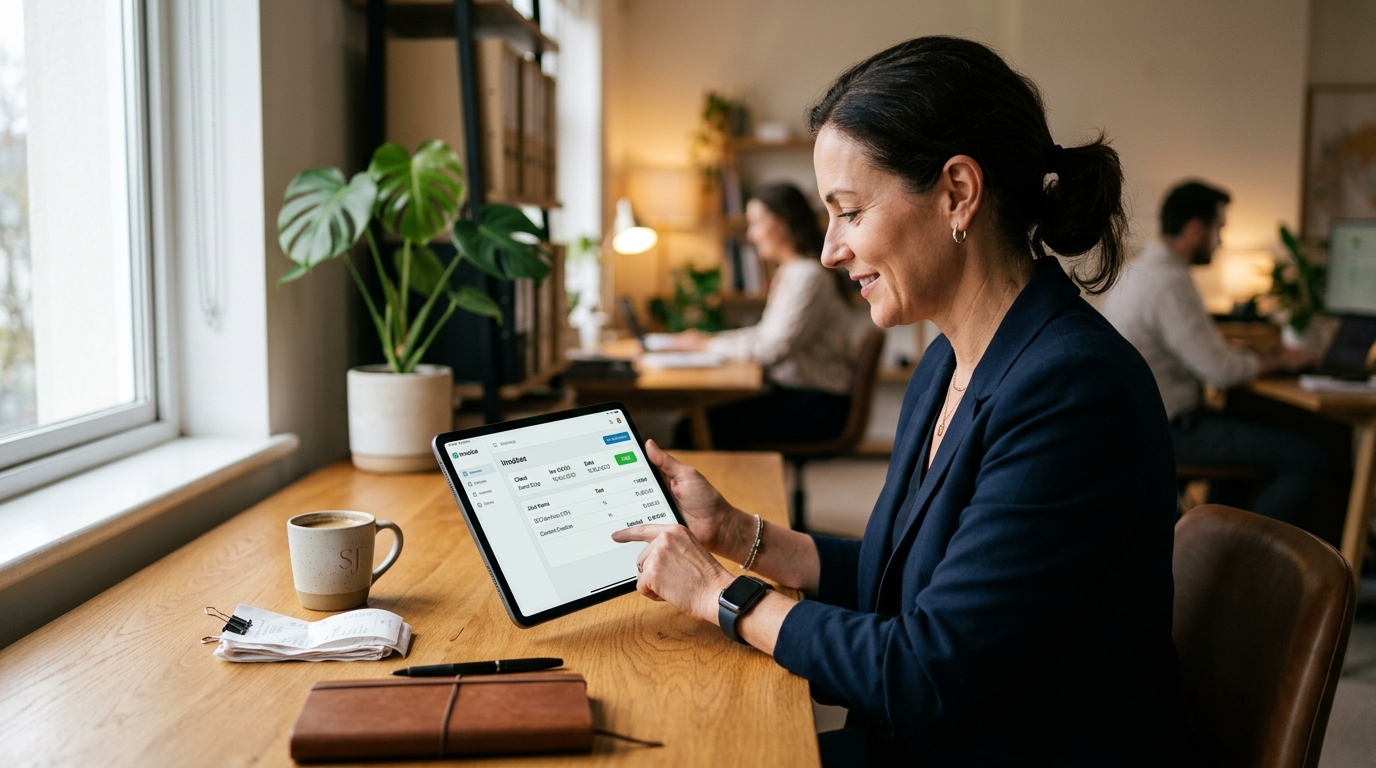
The data that used to require end-of-day reconciliation is current in real time. Sales by associate, by item, by time of day all of it available during the shift, not after it.
What to Look for When Choosing a Mobile POS System
Not all mobile POS platforms are the same. The differences matter.
Payment method coverage. The system should accept chip, swipe, contactless tap-to-pay, and digital wallets Apple Pay, Google Pay, and the major card networks. A platform that can't accept tap transactions is already behind where customer payment habits are.
Offline mode. Internet connections fail. A system that can't process transactions without a live connection becomes a liability in high-traffic environments or locations with unreliable connectivity. Look for systems that queue transactions locally and sync when the connection restores.
Inventory management integration. Real-time inventory synced across every device means your floor associates always have accurate stock information. Without it, you're either updating manually or running on stale data.
Reporting depth. The value of a mobile POS system isn't just faster checkout, it's the data it generates. Sales by hour, by product, by associate, by payment method. A system that processes transactions without surfacing that data is leaving insights on the table.
Scalability. Adding a location, adding devices, adding users these should be configuration changes, not infrastructure projects. Choose a platform designed to grow without requiring a new implementation at every expansion.
Processing rates and fee structure. The hardware and software are only part of the cost equation. The payment processing rates on every transaction are where the ongoing cost accumulates. Understand what you're paying per transaction before committing to a platform and compare it against what transparent, interchange-plus pricing would cost you.
Industries Where Mobile POS Changes the Operation
The fixed-register model was designed for high-volume, single-point checkout environments. Most businesses aren't that.
Retail stores gain floor mobility and the ability to eliminate checkout bottlenecks during peak hours. Associates can close sales anywhere in the store.
Restaurants and cafes use tableside ordering and payment to reduce the friction of the check-request-and-wait cycle. The turn time on tables shortens. Revenue per hour increases.
Food trucks and pop-ups operate without fixed infrastructure. A mobile payment POS on a tablet is the entire checkout system: no counters, no wiring, no installation.
Salons and service businesses process payments at the point of service, not at a separate front desk. The transaction completes naturally at the end of the appointment, without the customer having to move.
Trade shows and events convert from passive brand presence to active revenue generation. A portable checkout system means you leave with payment collected, not with business cards and follow-up emails.
The Processing Question That Comes After the Hardware Decision
Choosing a mobile POS platform and choosing your payment processor are two separate decisions that most businesses make as one. They shouldn't be.
Many mobile POS providers bundle processing into the platform flat-rate pricing that's simple to understand but expensive at volume. A business processing $50,000 a month at 2.7% flat is paying $1,350. The same volume on interchange-plus pricing structured honestly often runs $750–$900. The difference is real money, every month.
The right approach: choose the hardware and software that fits your operation. Then evaluate the processing separately or ensure the bundled rate is actually competitive for your transaction profile.
If you're not sure whether the rate you're on is fair, get an audit. Pull three months of statements and have someone who knows how to read them tell you what you're actually paying.
That's a fifteen-minute conversation that often surfaces a meaningful annual number.
Lorem ipsum dolor sit amet, consectetur adipiscing elit. Suspendisse varius enim in eros elementum tristique. Duis cursus, mi quis viverra ornare, eros dolor interdum nulla, ut commodo diam libero vitae erat. Aenean faucibus nibh et justo cursus id rutrum lorem imperdiet. Nunc ut sem vitae risus tristique posuere.
Card Style Two
It has survived not only five centuries, but also the leap into electronic typesetting, remaining essentially unchanged.
What is the difference between a mobile POS system and a traditional POS system?
A traditional POS system is fixed hardware installed at a specific location, typically a checkout counter. A mobile POS system runs on portable hardware (tablets, smartphones, dedicated handheld devices) and processes transactions from anywhere. Traditional systems offer stability and are suited for high-volume, single-point environments. Mobile systems offer flexibility and are suited for businesses where sales happen across a floor, at tables, or at off-site locations. Both can be built on robust payment infrastructure; the difference is physical mobility, not capability.
Is a mobile POS system secure for processing card payments?
Modern mobile POS systems use the same security standards as fixed terminals: end-to-end encryption, tokenization of card data, and PCI DSS compliance. The card reader encrypts payment data at the point of capture. The actual card number is never stored on the device. The security risk of a mobile payment POS system is not higher than a fixed terminal when the system is properly configured and reputable providers build those protections in as standard.
Can mobile POS systems work without an internet connection?
Most modern systems include an offline mode that stores transactions locally on the device when connectivity is lost and syncs them to the cloud when the connection restores. This is essential for food trucks, outdoor events, and locations with unreliable connectivity. Confirm offline capability and sync behavior before selecting a platform not all implementations handle it the same way.
What hardware do I need to run a mobile POS system?
The baseline is a tablet or smartphone loaded with POS software and a card reader either a dongle that connects via headphone jack or USB, or a Bluetooth-connected reader. For businesses handling significant volume, a dedicated handheld POS terminal provides a more durable form factor with an integrated screen and card reader. The hardware cost is significantly lower than traditional fixed terminals, and replacement is simpler.
How do I evaluate whether my mobile POS processing rate is competitive?
Calculate your effective rate: total fees charged last month divided by total processing volume. Then find out whether you're on flat-rate or interchange-plus pricing. Flat-rate simplifies billing but captures excess margin on lower-cost transactions. Interchange-plus states your actual interchange cost and processor margin separately, making it auditable. If your effective rate is above 2.5% for primarily in-person card transactions, there's likely room to reduce it. DATA ONE will audit your statements and show you exactly where your fees stand. Book your free audit →
Brooklyn Simmons
Blocks/Grid
Fusce at sapien turpis. Aliquam at purus posuere, mattis sapien nec, dignissim ipsum. Cras ac auctor eros, sagittis euismod ante. Nunc non luctus orci. Vivamus ultrices cursus nisi sed vehicula.
Proin dapibus, sapien a suscipit sodales, justo velit placerat quam, sit amet efficitur nunc est congue quam. Phasellus varius congue tellus, non dictum ligula consectetur eu. Nam lobortis varius eros. Nulla diam augue, suscipit id pellentesque in, tristique id sapien. Vestibulum congue lorem ac turpis pulvinar ultricies.
Mauris tristique, urna hendrerit ornare viverra, diam nibh vestibulum nulla, sit amet porttitor massa magna at elit. Curabitur nec diam ac nulla interdum ultrices vel non nisi. Nunc ut vehicula mauris. Ut facilisis cursus hendrerit. Suspendisse facilisis auctor nibh sit amet tempus. Sed scelerisque sit amet lectus tristique varius.
Lorem ipsum dolor sit amet, consectetur adipiscing elit. Suspendisse varius enim in eros elementum tristique. Duis cursus, mi quis viverra ornare, eros dolor interdum nulla, ut commodo diam libero vitae erat. Aenean faucibus nibh et justo cursus id rutrum lorem imperdiet. Nunc ut sem vitae risus tristique posuere.
A mobile POS system speeds up checkout, reduces hardware costs, and gives you real-time sales insights anywhere. Here’s what to consider before choosing one.
Courtney Henry
May 6, 2026
There are many variations of passages of Lorem Ipsum available, but the majority have suffered alteration in some form,
Oops! Something went wrong while submitting the form.
Guest
6 hours ago
Lorem ipsum dolor sit amet, consectetur adipiscing elit. Suspendisse varius enim in eros elementum tristique. Duis cursus, mi quis viverra ornare, eros dolor interdum nulla, ut commodo diam libero vitae erat. Aenean faucibus nibh et justo cursus id rutrum lorem imperdiet. Nunc ut sem vitae risus tristique posuere.
Oops! Something went wrong while submitting the form.
Guest
•
6 hours ago
Lorem ipsum dolor sit amet, consectetur adipiscing elit. Suspendisse varius enim in eros elementum tristique. Duis cursus, mi quis viverra ornare, eros dolor interdum nulla, ut commodo diam libero vitae erat. Aenean faucibus nibh et justo cursus id rutrum lorem imperdiet. Nunc ut sem vitae risus tristique posuere.
Ready to Build the Right Payment System for Your Business?
Speak with a Data One payments specialist to design a solution aligned with how your business operates — from payments and POS to software and growth tools.


.svg)